

White Label Decentralized Exchange (DEX)
A White Label Decentralized Exchange (DEX) is not just a faster way to launch a trading platform. It is a strategic shortcut to entering the market with a product that supports on-chain trading, user custody, and modular Web3 growth without forcing your team into a long, expensive custom build from day one.
For most businesses, the real question is not whether decentralized trading is interesting. It is whether they can bring a serious DEX to market with the right balance of speed, customization, security, and long-term flexibility. That is where Javizen fits. Javizen positions itself as a blockchain development company offering both ready-made and custom crypto infrastructure, including DEX launch services, tokenization, launchpad systems, P2P products, and broader Web3 development support.
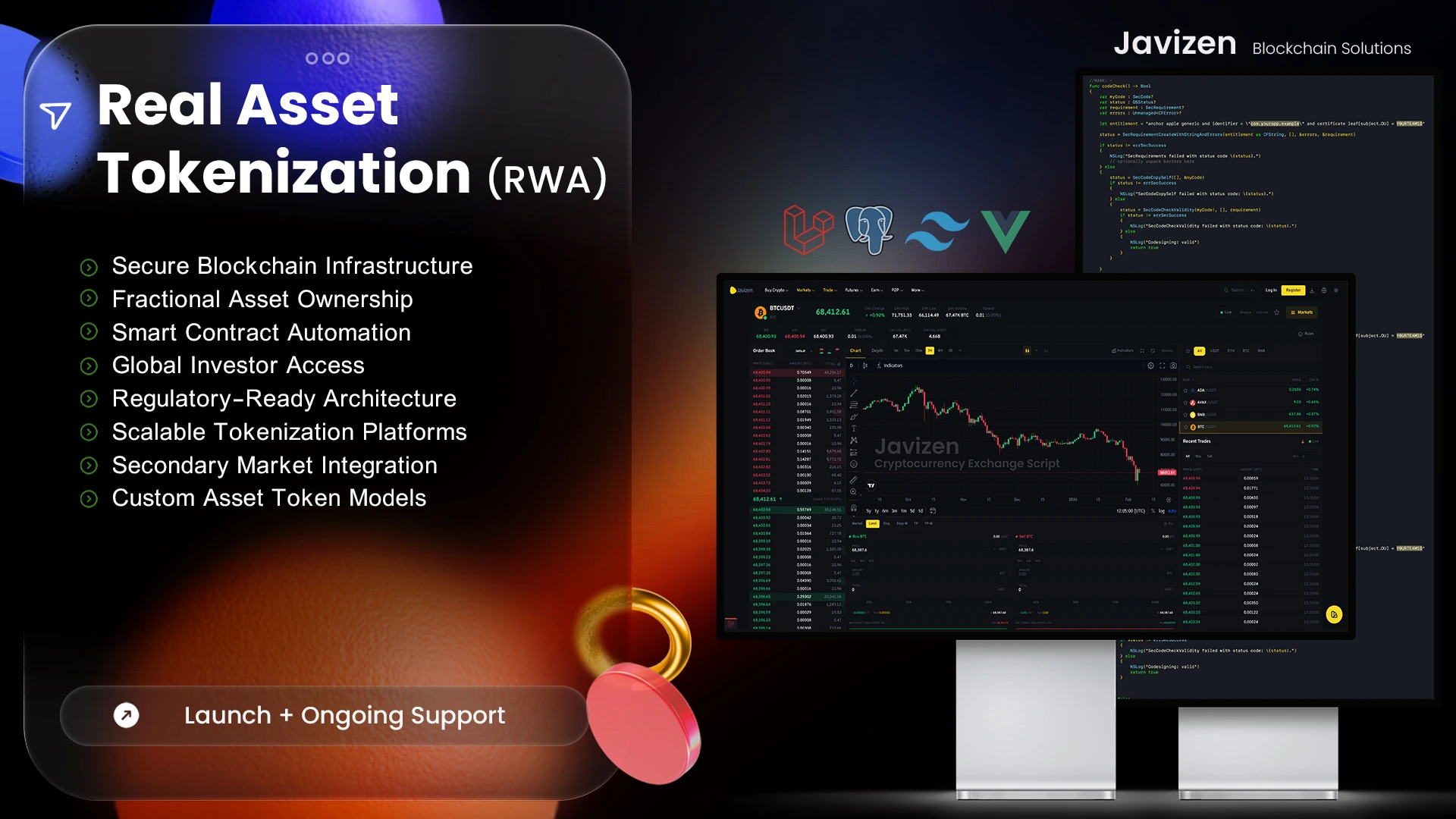
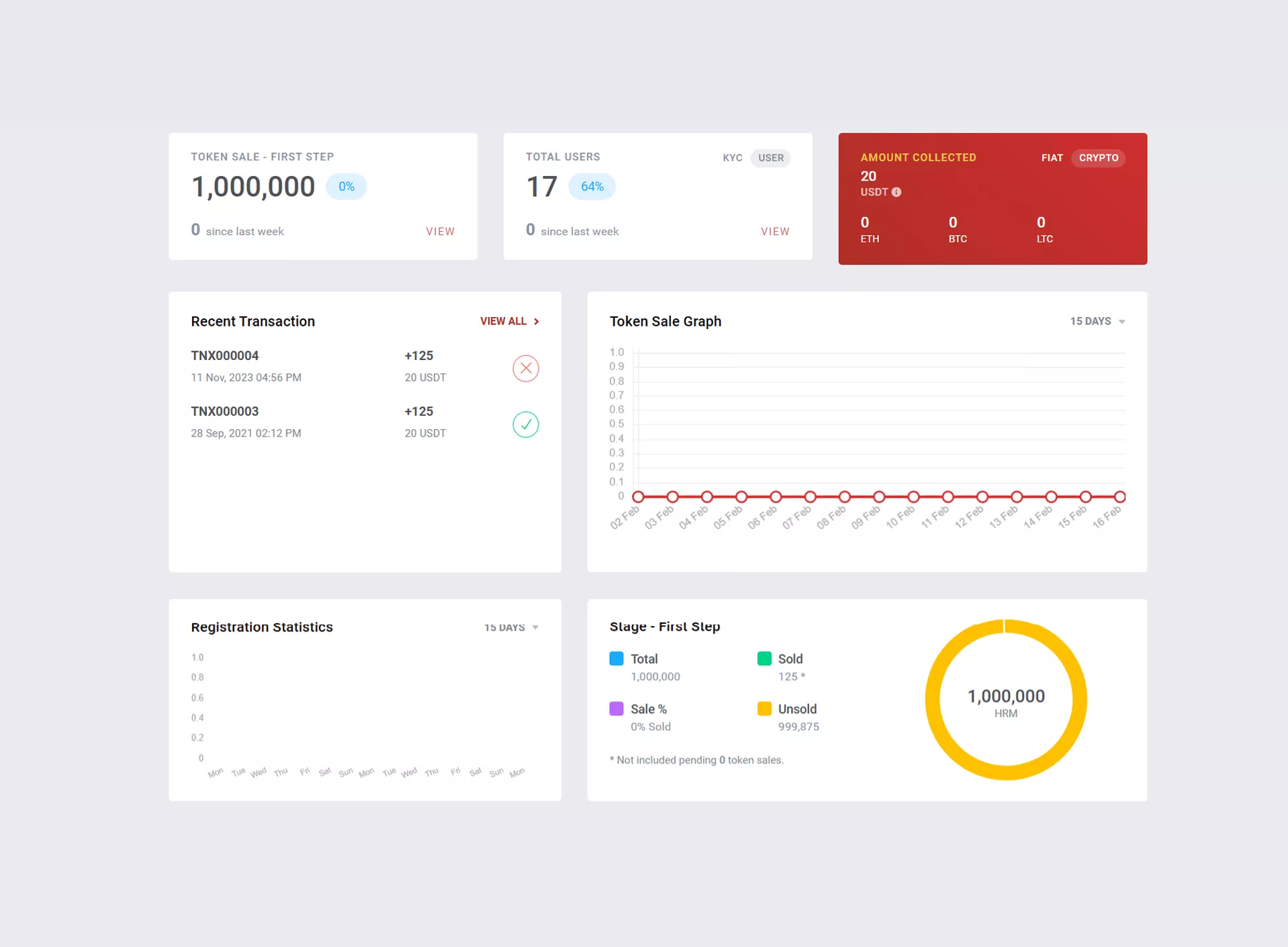
Javizen helps companies move from idea to launch with a practical approach to exchange infrastructure. Instead of forcing teams into a rigid off-the-shelf model or a long and expensive custom build, Javizen combines ready-made crypto exchange components with customization options that support your market strategy, user flows, and expansion roadmap. Javizen’s live product stack includes a CEX exchange script, P2P exchange script, ICO/STO dashboard, and RWA tokenization platform, alongside broader blockchain and exchange launch services.

Launch a White Label Decentralized Exchange (DEX) With a Product-First Strategy
Many teams exploring launching a decentralized crypto exchange underestimate how many decisions sit behind the interface. A DEX is not only about token swaps. It involves smart contract design, liquidity logic, wallet connectivity, fee models, chain selection, market structure, frontend usability, and a roadmap for future modules.
A weak build can slow adoption before the product ever has a chance to prove itself. A better approach is to start with a practical foundation, then shape the platform around your market, token ecosystem, and growth plan. Javizen’s public positioning reflects exactly that kind of model: ready-made products where speed matters, plus custom development where differentiation matters. Its solutions page specifically states that Javizen supports clients with launching a decentralized exchange through design, development, setup, deployment, and go-live, while also offering a ready-made DEX product tailored to client needs.
For most businesses, the real question is not whether decentralized trading is interesting. It is whether they can bring a serious DEX to market with the right balance of speed, customization, security, and long-term flexibility. That is where Javizen fits. Javizen positions itself as a blockchain development company offering both ready-made and custom crypto infrastructure, including DEX launch services, tokenization, launchpad systems, P2P products, and broader Web3 development support.
Javizen helps companies move from idea to launch with a practical approach to exchange infrastructure. Instead of forcing teams into a rigid off-the-shelf model or a long and expensive custom build, Javizen combines ready-made crypto exchange components with customization options that support your market strategy, user flows, and expansion roadmap. Javizen’s live product stack includes a CEX exchange script, P2P exchange script, ICO/STO dashboard, and RWA tokenization platform, alongside broader blockchain and exchange launch services.
That is important for buyers who want more than a cloned interface. They want a platform that can be launched credibly, customized intelligently, and expanded over time.
Why Businesses Choose a White Label DEX Instead of Building From Scratch
There are cases where a full custom DEX build makes sense. But for many startups, exchanges, fintech companies, and Web3 operators, the more practical route is to begin with a white label foundation.
A white label approach helps reduce the cost of rebuilding common exchange functionality while still leaving room for customization. This is especially useful when the business needs to move quickly, validate product-market fit, launch in phases, or integrate exchange functionality into a wider ecosystem.
The real value is not only speed. It is better focus. Instead of spending months on core infrastructure that already exists in mature product logic, teams can invest more in chain strategy, token utility, growth flows, UX refinement, community onboarding, and long-term differentiation.
Javizen’s broader messaging supports that positioning. The company highlights ready-made CEX, DEX, P2P, prop trading, and launchpad products alongside tailored development, with a modular architecture intended to support expansion without rewriting the core.
What a Modern Decentralized Exchange Should Include
A professional DEX should solve for both technical credibility and business usability. A serious buyer should expect more than swap screens and wallet buttons.
Smart contract and trading architecture
A DEX Cryptocurrency Exchange Script should start with the right on-chain foundation. Depending on the product model, that may involve AMM-based logic, routing considerations, token pair management, liquidity pool structures, fee mechanisms, and smart contract extensibility.
The key is not to overload the landing page with technical jargon. The real commercial message is that the product should be designed for growth, not only launch. Javizen states that the smart contracts powering its DEX solutions are designed according to modern global standards and are built to compete in structure, performance, and extensibility with leading international DEX platforms.
Admin, analytics, and product operations
Even decentralized products need operational visibility. Teams still need to manage releases, understand usage, plan market expansion, monitor integrations, and improve conversion from visitor to trader. A DEX without a product operations mindset often becomes difficult to evolve.
Growth beyond the core exchange
The strongest decentralized exchange businesses rarely stay limited to basic token swapping. Many grow into broader DeFi and Web3 ecosystems that may include token launches, launchpad functions, token development, asset tokenization, or hybrid models that connect DEX, CEX, and P2P flows. Javizen’s product and solutions structure is built around exactly this broader ecosystem logic.
Business Benefits of Launching a Decentralized Crypto Exchange With Javizene
A landing page should answer the commercial question directly: why choose this route and this partner?
Faster go-to-market
A white label DEX approach shortens the path from concept to launch. That matters when timing, trend capture, or investor pressure is part of the project environment.
Better use of budget
Instead of allocating most of the budget to rebuilding standard exchange infrastructure, teams can invest in tokenomics, ecosystem design, marketing, liquidity planning, and product refinement.

Custom development where it matters
Not every company wants a rigid template. Javizen presents itself as both a product provider and a development partner, which is more attractive for buyers who need the speed of a ready-made product with the flexibility of tailored execution.
A broader Web3 growth path
A DEX is often just one part of a larger product strategy. Javizen’s stack also includes launchpad and ICO/IDO-related solutions, tokenization services, and P2P trading systems, making it easier to expand from a single product into a more complete digital asset ecosystem.
Implementation, Customization, Security, and Scalability
A strong White Label Decentralized Exchange (DEX) should be evaluated not only on launch speed but on how manageable it remains afterward.
- 🔍
1. Deployment and technical planning
Javizen’s process description outlines a staged path: discovery and roadmap design, solution architecture and execution planning, development and integration, then launch, monitoring, and growth support. That is exactly the kind of structure serious buyers want to see, because it shows that the work is treated as a product rollout rather than a file handoff.
- 🧭
2. Customization and extensibility
The right DEX partner should be able to adapt the product to your network choices, token model, user journey, and long-term roadmap. Javizen repeatedly presents its solutions as modular and scalable, intended to support new modules and services without heavy rewrites.
- 💡
3. Security and smart contract responsibility
DEX security is not a slogan. It depends on smart contract quality, deployment discipline, upgrade strategy where relevant, wallet interaction design, permissions, and testing standards. Javizen’s solutions page specifically frames its DEX smart contracts around modern standards and competitiveness in structure and extensibility. That does not replace technical due diligence, but it is the right positioning for a commercial buyer evaluating vendor maturity.
- 🔧
4. Support after launch
A decentralized exchange is rarely finished at go-live. Product teams still need support for optimization, iteration, expansion, and user feedback loops. Javizen’s public messaging emphasizes launch, monitoring, and growth rather than stopping at initial delivery.
When to Extend Your DEX With Additional Modules
1
your token project needs a launchpad or sale workflow2
your exchange strategy includes hybrid CEX/DEX positioning3
you want to add P2P functionality for regional trading use cases4
your roadmap includes token creation, tokenomics, or RWA-related productsJavizen already structures its offering around these expansion paths. The company presents launchpad and ICO/IDO services, tokenization suite services, P2P exchange capabilities, and broader blockchain development services alongside exchange infrastructure.
Whether you are planning your first DEX or replacing a limited exchange stack, Javizen can help you choose a rollout model that supports launch now and product expansion later.
Book AI Consulting ServiceFAQ
- 1. What is a White Label Decentralized Exchange (DEX)?
A White Label Decentralized Exchange (DEX) is a pre-built decentralized trading platform that can be branded and customized for your business, reducing time to market compared with building from scratch.
- 2. Is a white label DEX suitable for startups?
Yes. It is often a practical option for startups that want to launch faster, control early costs, and validate the market before committing to deeper custom development.
- 3. Can Javizen support custom DEX development as well as ready-made solutions?
Yes. Javizen publicly positions itself as offering both ready-made exchange products and fully custom blockchain development, including DEX launch services.
- 4. Can a DEX be connected to launchpad or token sale features?
Yes. Javizen’s solutions and product catalog include launchpad and ICO/IDO-related capabilities that can support a broader token ecosystem strategy.
- 5. Is this relevant only for DeFi-native projects?
No. It can also fit fintech founders, exchanges, tokenization projects, and enterprises that want to enter Web3 through decentralized trading infrastructure.
- 6. What should buyers compare when choosing a DEX vendor?
Look at product flexibility, smart contract maturity, architecture, support model, adjacent ecosystem capabilities, and whether the provider can support growth beyond the first release.
- 7. Can Javizen help beyond the exchange itself?
Yes. Javizen also presents services and products around tokenization, P2P systems, launchpads, and custom blockchain development, which is valuable for companies planning a wider Web3 roadmap.
A credible White Label Decentralized Exchange (DEX) should do more than help you launch quickly. It should give you a practical base for building a stronger on-chain product, expanding into adjacent services, and evolving your platform as your market grows. That is the real value of working with a partner like Javizen: speed where it matters, customization where it counts, and a broader product vision behind the build.