
The Altcoin ETF Race: Why Solana, XRP, and HYPE Are Testing Wall Street’s Crypto Appetite
What Is the Altcoin ETF Race?
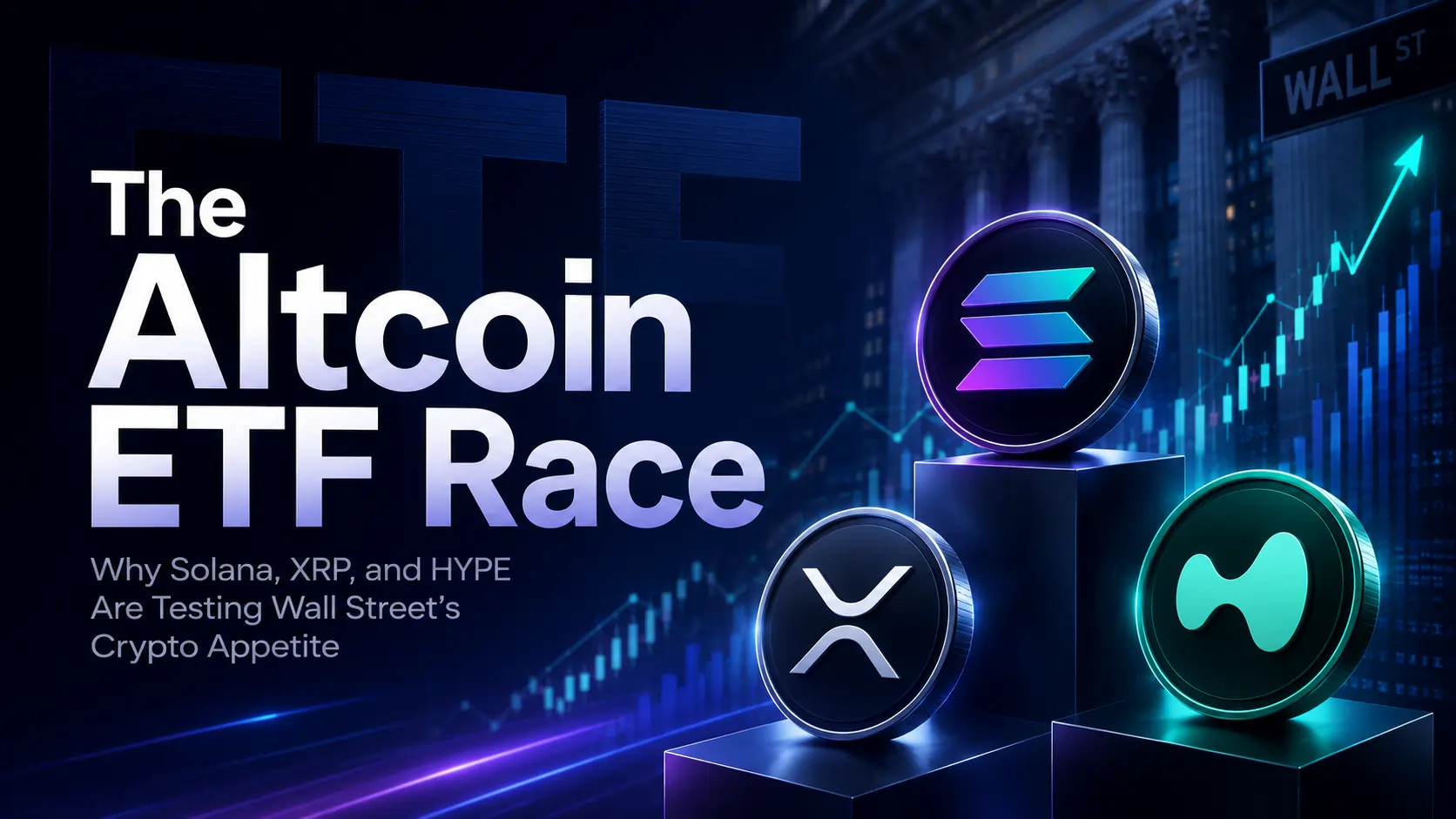
The altcoin ETF race is the competition among asset managers to launch exchange-traded funds based on cryptocurrencies beyond Bitcoin and Ethereum. After Bitcoin ETFs opened the door for mainstream crypto exposure, the market is now testing whether investors also want regulated access to assets like Solana, XRP, and Hyperliquid’s HYPE token. In simple words, Wall Street is asking a new question: Does crypto demand stop at Bitcoin, or can altcoins become investable products too? Solana, XRP, and HYPE are important because they represent three different investment stories. Solana is a high-speed smart contract network. XRP is tied to payments, settlement, and regulatory clarity. HYPE is linked to the growth of on-chain derivatives and Hyperliquid’s trading ecosystem. Together, they show how the next phase of crypto ETFs may be more selective, more competitive, and more risky than the Bitcoin ETF boom.
Why Altcoin ETFs Matter
Bitcoin ETFs changed crypto investing by giving traditional investors easier access to BTC through regulated brokerage accounts. Instead of managing wallets, private keys, exchanges, and self-custody, investors could buy Bitcoin exposure like a normal market product. Ethereum ETFs expanded that idea. They helped investors see crypto not only as digital gold, but also as programmable infrastructure. Now altcoin ETFs are trying to go one step further. They ask whether Wall Street investors are ready to treat individual blockchain ecosystems as investment themes. A Solana ETF is not just a crypto fund. It is a bet on high-speed on-chain finance. An XRP ETF is a bet on payment rails, settlement, and regulatory acceptance. A HYPE ETF is a bet on decentralized derivatives and the rise of on-chain trading infrastructure. This is why the altcoin ETF race matters. It is not only about more products. It is about how traditional finance chooses which crypto narratives deserve capital.
From Bitcoin Exposure to Crypto Selection
Bitcoin was the easiest crypto asset for Wall Street to understand. It has a fixed supply, strong brand recognition, deep liquidity, and a simple “digital gold” narrative. Altcoins are harder. Each altcoin has a different purpose, risk profile, community, token design, regulatory history, and market structure. This makes ETF selection more complicated. Investors must ask:
- Is the asset liquid enough?
- Is there real user demand?
- Is the token clearly useful?
- Is the regulatory status acceptable?
- Can institutions safely custody it?
- Is the network reliable?
- Does the ETF structure make sense?
- Will demand continue after launch hype fades?
This is why altcoin ETFs may not repeat the Bitcoin ETF story exactly. Bitcoin ETFs benefited from years of pent-up institutional demand. Altcoin ETFs must prove that demand exists asset by asset.
Why Solana Is Leading the Altcoin ETF Conversation
Solana is one of the strongest candidates for altcoin ETF demand because it has a clear investment narrative. Solana is known for speed, low transaction costs, active DeFi markets, strong stablecoin usage, consumer crypto apps, meme coin activity, and growing interest in tokenized assets. It is often positioned as a high-performance alternative to Ethereum. For ETF investors, Solana offers exposure to a smart contract ecosystem that is different from Bitcoin and Ethereum. Solana’s ETF appeal comes from several factors:
- High transaction activity
- Strong retail and developer community
- Growing stablecoin usage
- Active DeFi ecosystem
- Staking potential
- Institutional product interest
- Clear “high-performance blockchain” narrative
Staking is especially important. Some Solana ETF products may include staking, which could make them more attractive because staking can generate yield. However, staking also introduces extra complexity, including validator risk, lockup rules, regulatory questions, and product-design challenges. Solana ETFs are therefore not just about price exposure. They are about whether investors want access to a productive blockchain asset.
XRP ETFs and the Regulation Narrative
XRP has a different story. Unlike Solana, XRP is less about DeFi experimentation and more about payments, settlement, liquidity, and legal clarity. Its long regulatory history made XRP one of the most watched crypto assets in the U.S. market. For ETF investors, XRP’s appeal is tied to its role as a payment-focused digital asset and its stronger recognition among traditional crypto investors. The XRP ETF narrative includes:
- Cross-border payments
- Settlement infrastructure
- Regulatory clarity
- Long market history
- Strong retail interest
- Institutional curiosity
- Liquidity on major exchanges
XRP is also important because it tests whether Wall Street is willing to support assets with complicated regulatory histories. If XRP ETFs can attract sustainable demand, it may show that investors care not only about technology, but also about legal resolution and market familiarity. However, XRP also faces challenges. Critics question its decentralization, token distribution, and long-term utility compared with newer blockchain ecosystems. So XRP ETFs may attract attention, but they also need a strong investment thesis beyond name recognition.
Why HYPE Is the Wild Card
HYPE is the most unusual asset in the altcoin ETF race. HYPE is connected to Hyperliquid, one of the most important platforms in the on-chain derivatives market. Hyperliquid has gained attention because it offers fast perpetual futures trading, strong liquidity, and an experience that feels closer to centralized exchanges than older DeFi platforms. A HYPE ETF is not just a bet on a blockchain token. It is a bet on decentralized trading infrastructure. That makes it different from Solana and XRP. Solana represents a broad smart contract ecosystem. XRP represents payments and settlement. HYPE represents the rise of on-chain perpetual futures, decentralized exchanges, and crypto-native trading markets. This is why HYPE is a powerful but risky ETF theme. It is powerful because derivatives are one of the largest revenue engines in crypto. If on-chain perps continue growing, Hyperliquid could remain a major winner. It is risky because HYPE is newer, more volatile, and more closely tied to one ecosystem’s execution. If Hyperliquid loses momentum, faces regulatory pressure, or sees liquidity decline, HYPE-related products could be hit hard. For Wall Street, HYPE tests whether investors want exposure to fast-growing crypto infrastructure, not just established networks.
Why Wall Street Wants More Crypto ETFs
Asset managers want crypto ETFs because ETFs are familiar, scalable, and fee-generating products. For investors, ETFs simplify access. For issuers, they create recurring management fees. For exchanges, they create trading volume. For advisors, they make crypto easier to include in client portfolios. Altcoin ETFs can help Wall Street create products around different crypto themes:
- Smart contract platforms
- Payment networks
- Staking yield
- DeFi infrastructure
- On-chain derivatives
- Tokenized asset ecosystems
- Crypto indexes
- Sector baskets
This turns crypto from a single-asset allocation into a product category. Instead of only asking whether clients should own Bitcoin, advisors may ask how much exposure they want to crypto infrastructure, crypto payments, or crypto trading networks. That is a more mature investment conversation.
The Risk: Not Every ETF Will Survive
The altcoin ETF race also has a major risk: too many products chasing limited demand. Bitcoin and Ethereum have the deepest liquidity, strongest brands, and widest institutional recognition. Altcoins are more fragmented. Investors may not understand every asset, and many funds may struggle to attract enough assets under management. An ETF can launch successfully and still fail later if demand fades. The risks include:
- Low trading volume
- High fees compared with larger funds
- Poor liquidity
- Tracking problems
- Regulatory uncertainty
- Product closures
- Weak investor education
- Overreliance on hype
This is why the altcoin ETF race may create winners and losers. The market may support a few strong products, but not every altcoin will deserve an ETF. ETF approval does not automatically mean long-term investor demand.
Staking ETFs: A New Layer of Complexity
Staking adds another dimension to the altcoin ETF race. In proof-of-stake networks like Solana, staking can generate rewards by helping secure the network. For ETF investors, staking rewards may look similar to yield. But staking inside an ETF is more complicated than simply holding a token. Important questions include:
- Who chooses the validator?
- How are staking rewards distributed?
- Are rewards reinvested or paid out?
- What are the risks of slashing?
- Can the fund remain liquid during unstaking periods?
- How are staking rewards taxed?
- Does staking change the regulatory profile?
These questions matter because institutions need clear product mechanics. A staking ETF may be attractive, but it also has more operational and regulatory complexity than a simple spot ETF. This is especially relevant for Solana and HYPE-related products if staking is included.
What Altcoin ETFs Mean for Exchanges
Altcoin ETFs can affect crypto exchanges in several ways. First, they can increase awareness of specific assets. If a Solana, XRP, or HYPE ETF attracts strong flows, more users may search for those assets on exchanges. Second, ETFs can improve liquidity by creating more institutional attention and market-maker activity. Third, ETFs can change price discovery. More trading may happen through traditional markets, not only crypto-native exchanges. Fourth, ETFs can create new competition. Some investors may choose ETF exposure instead of buying the token directly. For exchanges, the opportunity is to offer deeper tools around these assets:
- Spot trading
- Futures trading
- Staking access
- ETF education
- Wallet support
- Institutional custody
- Asset research
- Portfolio dashboards
- Risk warnings
Crypto exchanges that explain ETF flows clearly can become more trusted education platforms.
What Altcoin ETFs Mean for Investors
For investors, altcoin ETFs offer easier access, but not lower risk. Buying a Solana ETF, XRP ETF, or HYPE ETF does not remove volatility. It only changes the access method. Investors still need to understand:
- The underlying asset
- The ETF fee structure
- Liquidity
- Custody
- Tracking performance
- Staking mechanics
- Regulatory risks
- Market concentration
- Token-specific risks
An ETF wrapper can make crypto easier to buy, but it cannot make crypto safe by default. This is especially important for altcoins. Bitcoin has a simpler thesis. Altcoins often depend on network adoption, developer activity, token economics, competition, and regulatory treatment. That means altcoin ETFs require more research, not less.
Could Altcoin ETFs Bring More Institutions Into Crypto?
Yes, but selectively. Altcoin ETFs can bring more institutions into crypto by making exposure easier, regulated, and compatible with traditional investment systems. But institutions are unlikely to treat all altcoins equally. They will likely focus on assets with:
- Strong liquidity
- Clear custody support
- Recognizable narratives
- Regulatory confidence
- Real usage
- Professional market infrastructure
- Sustainable demand
This is why Solana, XRP, and HYPE are useful examples. Each tests a different form of institutional appetite. Solana tests appetite for high-performance blockchain infrastructure. XRP tests appetite for payments and legally battle-tested crypto assets. HYPE tests appetite for on-chain derivatives and newer crypto-native financial platforms. Together, they show that Wall Street’s next crypto phase may be more selective than the Bitcoin ETF boom.
Final Thoughts
The altcoin ETF race is one of the most important signs that crypto is entering a new investment phase. Bitcoin ETFs proved that traditional investors want regulated crypto exposure. Ethereum ETFs expanded the market into smart contract infrastructure. Now Solana, XRP, and HYPE are testing whether Wall Street is ready for more specific crypto themes. But this race will not reward every token equally. The winners will be assets with strong liquidity, clear narratives, real usage, professional custody, and sustainable investor demand. The losers may be products that launch into hype but fail to attract long-term capital. For investors, the lesson is simple: an ETF does not make an asset low-risk. It only makes access easier. For the crypto industry, the message is bigger: Wall Street is no longer only buying Bitcoin. It is starting to sort the crypto market into categories, products, and investment themes. That may be the real beginning of the altcoin ETF era.
Frequently asked questions
What is an altcoin ETF?
An altcoin ETF is an exchange-traded fund that gives investors exposure to a cryptocurrency other than Bitcoin, such as Solana, XRP, or HYPE.
Why are Solana ETFs important?
Solana ETFs are important because they give investors exposure to a high-speed smart contract network and may include staking features in some products.
What is an XRP ETF?
An XRP ETF is a fund designed to track the price of XRP, a crypto asset associated with payments, liquidity, and settlement use cases.
What is a HYPE ETF?
A HYPE ETF is a fund that gives investors exposure to Hyperliquid’s HYPE token, which is connected to the growth of on-chain derivatives and perp DEX trading.
Are altcoin ETFs safer than buying crypto directly?
Not necessarily. ETFs simplify access and custody, but investors still face price volatility, product fees, liquidity risk, and regulatory risk.
Can staking ETFs generate yield?
Some staking ETFs may generate staking rewards, but investors must understand validator risk, fees, liquidity, taxes, and product rules.
Will every altcoin get an ETF?
No. Only assets with enough liquidity, demand, custody support, regulatory clarity, and issuer interest are likely to support successful ETF products.
Could altcoin ETFs bring institutions into crypto?
Yes. Altcoin ETFs can help institutions access specific crypto themes, but demand will likely be selective and focused on the strongest assets.
آخر مقال
 06 Sep, 2026
How to Build a Crypto Options Trading Platform
 05 Sep, 2026
How to Launch a Crypto Prop Trading Platform
 03 Sep, 2026
How to Scale a Crypto Exchange for High Trading Volume
 02 Sep, 2026
How to Design a Crypto Exchange Fee Structure
 01 Sep, 2026
Market Makers vs Liquidity Providers: What Is the Difference?
Build with Javizen.
Planning an exchange, token or blockchain product? Talk to our team and turn the ideas in this article into a launch-ready platform.