
How Artificial Intelligence Is Reshaping Blockchain
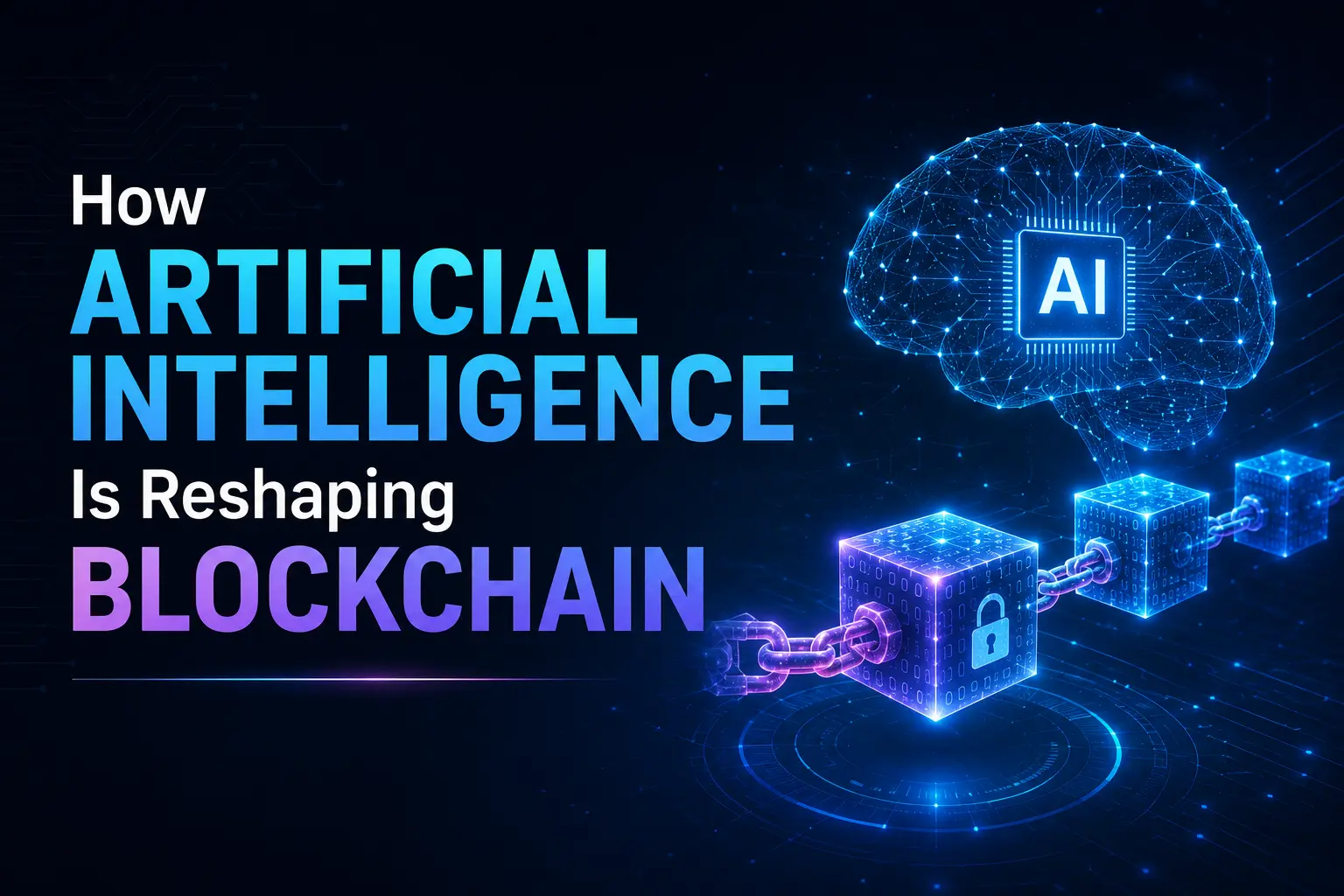
What Is AI-Driven Blockchain?
AI-driven blockchain refers to the integration of artificial intelligence algorithms into blockchain networks. This fusion enables smart decision-making, predictive analytics, and enhanced automation within decentralized systems. Key characteristics include:
- Automated smart contracts – AI can optimize execution and error detection in real time.
- Predictive analytics – AI models forecast trends in blockchain networks and token performance.
- Fraud detection – Machine learning identifies anomalies, ensuring network integrity.
- Scalability solutions – AI helps optimize consensus mechanisms and transaction throughput.
Enhancing Security and Fraud Prevention
Blockchain’s immutability ensures data integrity, but AI adds an additional layer of intelligence:
- Anomaly detection – Machine learning algorithms can detect unusual patterns in transactions or wallet behavior.
- Predictive threat modeling – AI anticipates vulnerabilities and proactively secures networks.
- Decentralized risk assessment – AI evaluates smart contracts and nodes for potential attacks, reducing fraud and hacking risks.
Optimizing Blockchain Performance
AI helps tackle blockchain’s scalability and efficiency challenges:
- Transaction speed optimization – AI predicts network congestion and dynamically adjusts fees or routing.
- Energy efficiency – AI-based algorithms reduce resource consumption in proof-of-work or hybrid consensus models.
- Dynamic resource allocation – AI optimizes node computing power, ensuring smooth and cost-effective operation.
Revolutionizing Decision-Making and Governance
- Decentralized autonomous organizations (DAOs) – AI facilitates voting analysis, sentiment detection, and governance automation.
- Smart contract intelligence – AI monitors contract execution and adapts terms dynamically for efficiency or compliance.
- Market predictions – Predictive analytics inform token issuance, staking, and DeFi investment strategies.
Real-World Applications of AI + Blockchain
| Applications | Features |
|---|---|
| Finance & DeFi | AI enhances algorithmic trading, risk assessment, and fraud prevention. |
| Supply Chain | Blockchain ensures transparency; AI predicts demand, tracks anomalies, and optimizes logistics. |
| Healthcare | Secure patient data management with blockchain, AI-driven diagnostics, and predictive modeling. |
| Energy Sector | AI forecasts consumption patterns while blockchain ensures decentralized energy transactions. |
Benefits of Integrating AI in Blockchain
- Increased transparency and trust – Automated audits and predictive monitoring enhance accountability.
- Improved efficiency – Faster transaction processing and optimized resource usage.
- Advanced analytics – Real-time insights for investment, governance, and operational decisions.
- Enhanced security – AI reduces human error and detects fraudulent activities promptly.
Challenges and Considerations
While AI integration offers transformative potential, there are challenges to consider: Complexity – Combining AI and blockchain requires expertise in both fields. Data privacy – Ensuring AI models don’t compromise decentralized data integrity. Regulatory uncertainty – AI-driven blockchain applications must comply with evolving global regulations. Energy consumption – Despite AI optimizations, some blockchain operations remain resource-intensive.
The Future of AI and Blockchain
The synergy between AI and blockchain is expected to drive: Smart decentralized ecosystems – Autonomous systems making real-time decisions. AI-powered token economies – Predictive insights for investors and stakeholders. Cross-industry adoption – Healthcare, finance, logistics, and energy sectors leading innovation. Interoperable networks – AI facilitating seamless communication across multiple blockchains. The fusion of AI and blockchain is no longer theoretical! it’s a practical revolution reshaping industries, investment strategies, and digital infrastructures worldwide.
Real‑World AI Use Cases in Blockchain
In 2026, the convergence of artificial intelligence and blockchain is moving beyond theory into practical, production‑grade applications. Instead of merely analyzing data, AI is beginning to execute transactions, manage assets, and automate smart contracts with minimal human involvement — a transformation supported by advancements in agent tooling, wallet‑native autonomous agents, and decentralized inference systems.
1. Autonomous AI Agents with Wallet Access
AI systems can now operate wallets, rebalance treasury positions, interact with smart contracts, and handle routine tasks like executions of trades or settlement. These agents can be configured with policy controls such as spending caps, approval lists, risk scores, and emergency stop switches to ensure safety and governance.
2. On‑Chain AI Inference via Decentralized Infrastructure
Decentralized GPU and inference networks are enabling AI capabilities that are verifiable, accountable, and economically secured by crypto networks. This allows blockchain applications to incorporate AI services — from prediction models to automated compliance checks — without centralized dependencies.
3. Tokenized Ownership of Models and Data
Platforms are experimenting with data NFTs and model NFTs — where datasets and AI model access are tokenized and traded. This clarifies rights, sharing rules, and economic incentives while providing a transparent incentive structure that traditional AI rarely offers.
4. Federated Learning Coordinated by Blockchain
AI training across decentralized nodes via federated learning is improving machine learning models without sharing raw data. Blockchain ensures provenance, reward distribution, and traceability for participants, which supports privacy‑preserving innovation and lowers risks in regulated sectors.
5. Practical Benefits
These AI‑blockchain integrations address real industry challenges such as real‑time risk assessment, automated auditing, smarter portfolio rebalancing, and secure asset custody. Rather than being a marketing buzzword, AI is now a component of blockchain automation stacks that enable smoother operations and new types of decentralized products.
When positioning AI in the context of blockchain, focus on tangible innovations — autonomous agents, decentralized inference, tokenized ownership, and practical automation — rather than nebulous future promises.
Frequently asked questions
What is AI-driven blockchain?
AI-driven blockchain refers to the integration of artificial intelligence algorithms with blockchain networks. AI can optimize smart contract execution, enhance transaction validation, predict trends, and improve decision-making within decentralized systems.
How does AI improve blockchain security?
AI enhances blockchain security by detecting anomalies, identifying potential fraud, predicting attacks, and continuously monitoring network activity. Machine learning models help reduce vulnerabilities and prevent hacking attempts in real-time.
What are some real-world applications of AI in blockchain?
+ Finance & DeFi: AI supports algorithmic trading, risk management, and fraud detection. + Supply Chain: AI forecasts demand and optimizes logistics while blockchain ensures transparency. + Healthcare: AI analyzes patient data, and blockchain secures medical records. + Energy: AI predicts consumption, and blockchain facilitates decentralized energy transactions.
How does AI enhance smart contracts?
AI can monitor smart contract execution, identify errors or inefficiencies, and adapt contract terms dynamically based on real-time data. This reduces risk and increases automation reliability.
Does AI affect blockchain governance?
Yes. AI helps in decentralized autonomous organizations (DAOs) by analyzing voting patterns, sentiment, and participation. It supports efficient governance and decision-making while enhancing transparency.
What are the challenges of AI-powered blockchain?
+ Complexity in implementation + Data privacy concerns + Regulatory uncertainty + Potential high computational requirements + Dependence on quality and availability of data for AI models
What is the future of AI in blockchain?
The integration of AI with blockchain is expected to grow, enabling smarter decentralized ecosystems, interoperable networks, AI-powered token economies, and cross-industry adoption. It will transform finance, healthcare, energy, and supply chain management.
Latest Post
 06 Sep, 2026
How to Build a Crypto Options Trading Platform
 05 Sep, 2026
How to Launch a Crypto Prop Trading Platform
 03 Sep, 2026
How to Scale a Crypto Exchange for High Trading Volume
 02 Sep, 2026
How to Design a Crypto Exchange Fee Structure
 01 Sep, 2026
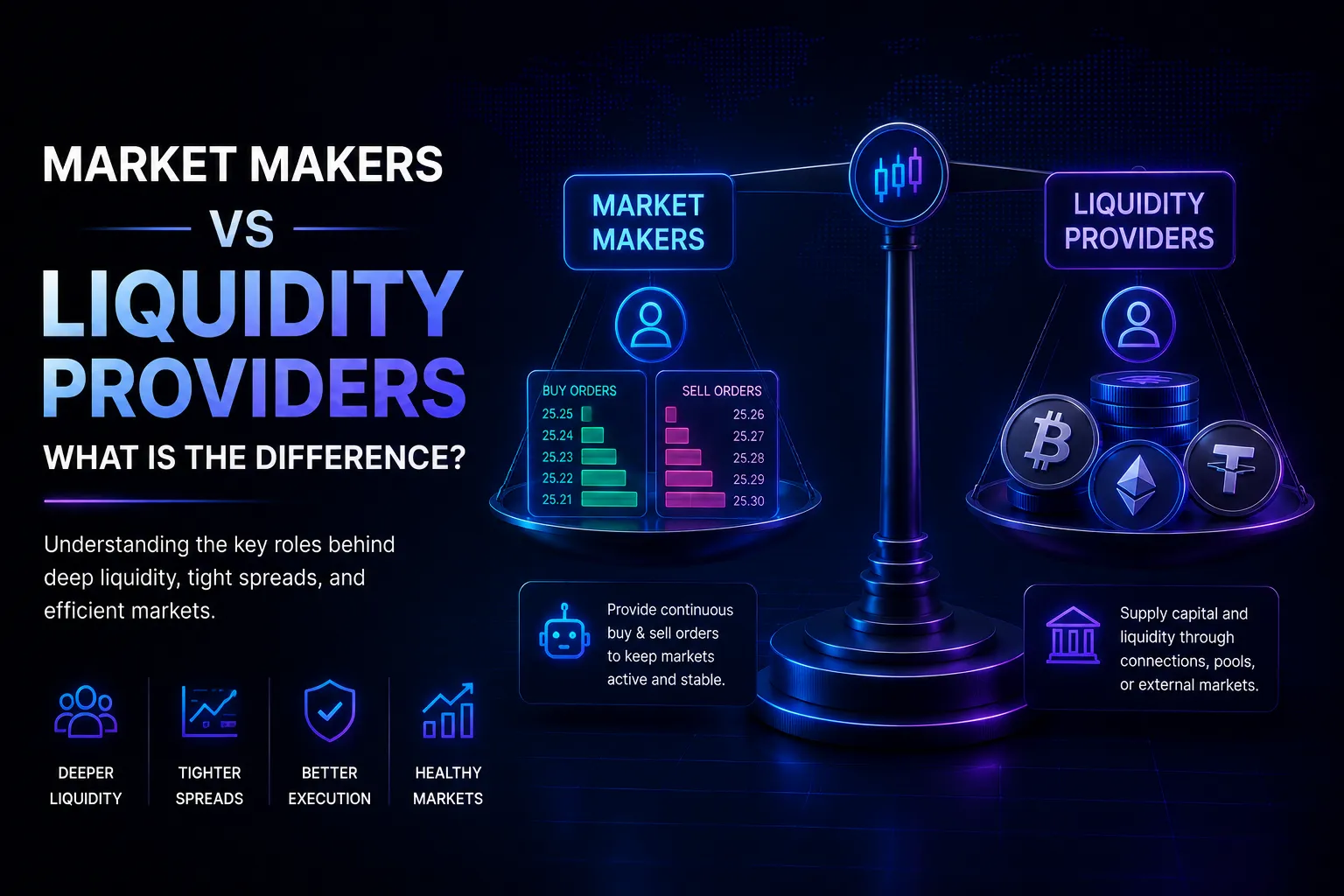
Market Makers vs Liquidity Providers: What Is the Difference?
Build with Javizen.
Planning an exchange, token or blockchain product? Talk to our team and turn the ideas in this article into a launch-ready platform.