
Crypto Exchange Licensing: What You Need Before Launch
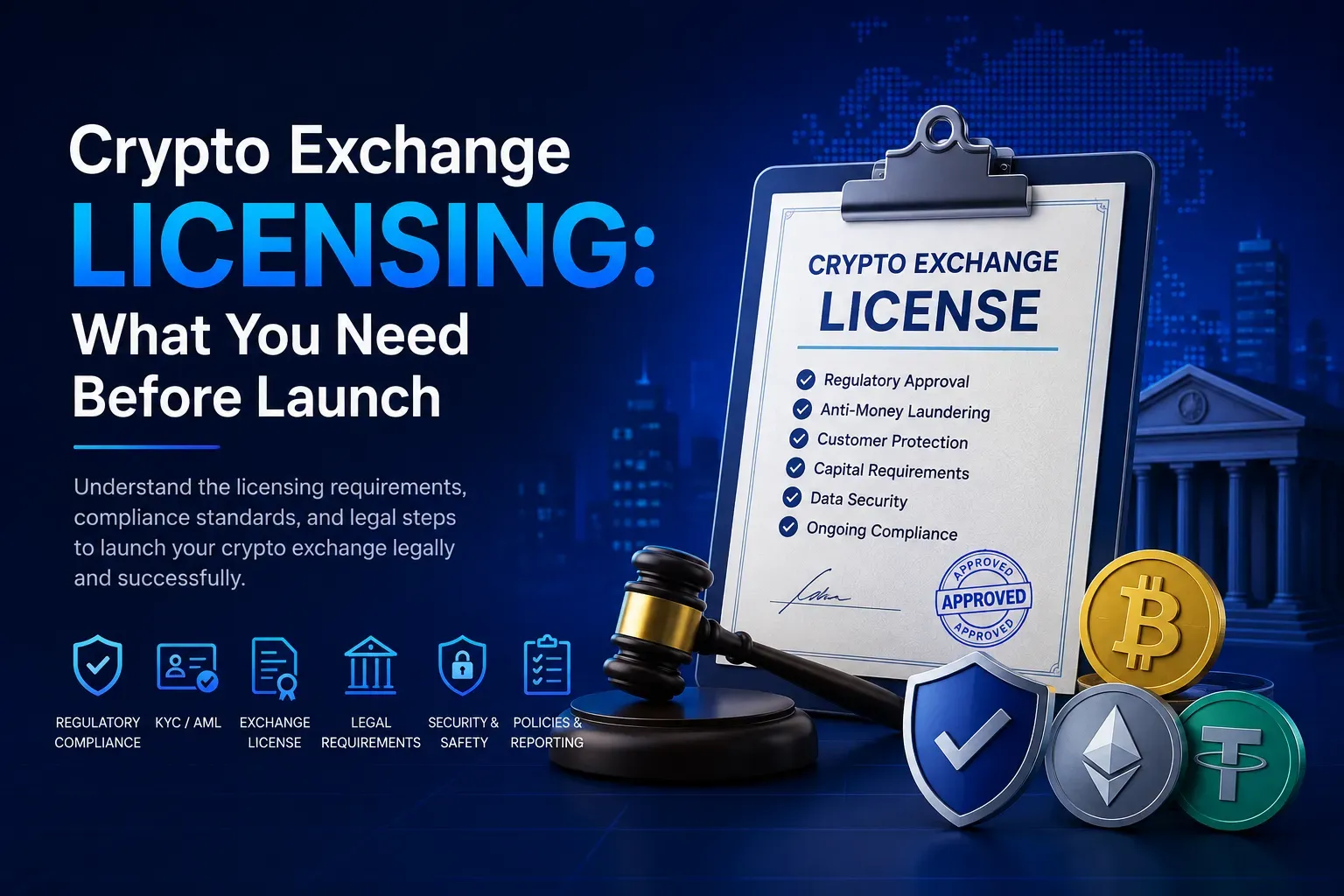
Does Every Crypto Exchange Need a Licence?
Not every crypto business requires the same licence, but most centralized exchanges perform activities that fall within regulated categories. A platform that exchanges crypto for fiat currency, exchanges one crypto asset for another, transfers assets for customers, safeguards private keys, or operates a trading venue may be classified as a virtual asset service provider, crypto-asset service provider, money transmitter, money services business, or another form of regulated financial institution. The name of the authorization varies by jurisdiction. Some countries issue a dedicated virtual asset licence. Others regulate exchanges under payment, securities, commodities, money-transmission, custody, or anti-money laundering laws. A non-custodial software provider may face a different analysis from a custodial exchange. However, describing a product as decentralized or non-custodial does not automatically remove regulatory obligations. Authorities normally examine the actual activity, level of control, revenue model, governance, and relationship with customers. Founders should complete a jurisdiction-specific legal classification before accepting funds, opening public registrations, or marketing the exchange.
Start with the Exchange’s Activity Map
The first licensing task is not choosing a country. It is defining exactly what the platform will do. A spot exchange with custodial wallets has a different regulatory profile from a P2P marketplace, derivatives venue, broker, non-custodial DEX interface, staking platform, or token launchpad. The activity map should explain whether the exchange will hold private keys, maintain customer fiat balances, match orders, act as principal or agent, route trades externally, issue tokens, provide leverage, process payments, or transfer assets between wallets. This information determines which permissions may be required and which regulators are relevant. For example, the European Union’s Markets in Crypto-Assets Regulation distinguishes services including custody, operating a crypto trading platform, exchanging crypto assets for funds or other crypto assets, executing orders, placing assets, and providing transfer services.
Core Requirements Before Applying
Although regulatory frameworks differ, founders should generally prepare the following areas before submitting an exchange licence application:
- Corporate structure and ownership: Legal entity documents, organizational charts, directors, shareholders, ultimate beneficial owners, group companies, source of capital, and qualifying holdings.
- Business plan and financial model: Target customers, products, supported jurisdictions, expected volumes, revenue sources, operating costs, capital requirements, and financial projections.
- Governance and management: Fit-and-proper directors, experienced compliance leadership, clear responsibilities, conflict-of-interest controls, and effective local management where required.
- AML and sanctions programme: Customer risk assessment, KYC/KYB, enhanced due diligence, sanctions and PEP screening, transaction monitoring, suspicious activity reporting, record retention, and Travel Rule processes.
- Customer-asset protection: Custody model, segregation, internal ledger, reconciliation, withdrawal controls, safeguarding procedures, and insolvency treatment.
- Technology and cybersecurity: System architecture, access control, wallet security, encryption, monitoring, backups, penetration testing, incident response, and business continuity.
- Market operations: Matching engine rules, liquidity sources, listing standards, market surveillance, fee structures, complaint handling, and controls against manipulation.
- Outsourcing and vendors: Cloud hosting, KYC providers, wallet systems, liquidity providers, payment partners, blockchain analytics, data processors, and service-level agreements.
This is the first of only two lists in this article. Regulators may ask for policies, technical diagrams, contracts, staff résumés, financial evidence, risk assessments, test results, and demonstrations of the platform’s operational workflows.
Choosing the Right Jurisdiction
The best jurisdiction is not necessarily the one advertising the lowest licence fee or fastest application. Founders should evaluate whether the country permits the intended products, offers access to target customers, supports banking relationships, recognizes the planned custody model, and has a credible regulatory framework. They should also consider local substance requirements. Some regulators expect a registered office, resident directors, local compliance staff, physical operations, or evidence that strategic decisions are made within the jurisdiction. Under MiCA, an authorized crypto-asset service provider must have a registered office in an EU Member State where it carries out at least part of its services. Its effective management must be in the EU, and at least one director must be resident there. A licence in one country may not automatically permit active solicitation in another. Founders must assess both the home jurisdiction and every market where the exchange plans to advertise or onboard customers.
Crypto Exchange Licensing in the European Union
MiCA created a common framework for crypto-asset service providers across the European Union. A business seeking to operate a crypto trading platform, provide custody, exchange crypto assets, or perform other covered services generally needs authorization from the competent authority in its home Member State, unless it qualifies to operate through an existing regulated financial status and notification route. Once properly authorized, a crypto-asset service provider can use MiCA’s cross-border framework to provide approved services in other EU Member States after completing the required notification process. An application may address governance, capital, safeguarding, complaints, outsourcing, cybersecurity, custody procedures, operating rules, conflicts of interest, and the competence of management. ESMA has also issued supervisory material intended to promote consistent assessment of CASP authorization applications across national authorities. Operating a trading platform creates continuing obligations. For example, MiCA requires platform operators to notify their competent authority when they identify market abuse or attempted market abuse through their systems.
Crypto Exchange Registration in the United States
The United States does not have one universal federal crypto exchange licence covering every activity and state. At the federal level, a business that accepts and transmits convertible virtual currency or acts as an exchanger may qualify as a money transmitter under FinCEN rules. FinCEN guidance states that covered businesses are subject to money services business registration and anti-money laundering, record-keeping, monitoring, and reporting obligations. FinCEN MSB registration is not the same as full authorization to operate throughout the United States. Depending on the activity and customer locations, state money-transmitter licences may also be required. Additional federal or state rules may apply when a platform supports securities, derivatives, commodities, lending, or interest-bearing products. FinCEN states that MSB registration must generally be filed within 180 days after the business is established and renewed every two years. Founders should not market FinCEN registration as government approval of the exchange. Registration is one part of a broader regulatory analysis.
Crypto Exchange Registration in the United Kingdom
Crypto businesses performing activities covered by the UK Money Laundering Regulations must register with the Financial Conduct Authority before beginning those services. The FCA states that businesses providing in-scope cryptoasset services in the UK must be registered before they start operating. Applicants must demonstrate that their business, owners, managers, risk assessment, KYC processes, transaction monitoring, sanctions controls, and compliance systems meet the required AML standards. The FCA explicitly expects applicants to understand the UK AML regime and be ready to comply from the date of registration rather than develop their programme afterward. The UK regulatory framework is also evolving. The FCA stated in March 2026 that firms conducting regulated cryptoasset activities under the forthcoming framework will need authorization under the Financial Services and Markets Act. This makes it especially important for founders targeting the UK to verify the rules and transitional arrangements applicable at the intended launch date.
AML, KYC, and the Travel Rule
A licence application will usually require more than a written AML policy. The exchange must demonstrate how customer risks are identified, how individual and business accounts are verified, how sanctions alerts are reviewed, how transactions are monitored, and how suspicious activity is escalated. The compliance model should connect customer identity, fiat payments, blockchain transactions, devices, account behaviour, wallet exposure, and source-of-funds information. The Travel Rule may require originator and beneficiary information to accompany qualifying crypto transfers between regulated businesses. FATF treats these transfer-information requirements as part of the preventive framework applicable to VASPs. In the UK, crypto businesses have been required to collect, verify, and share specified information for relevant transfers since September 1, 2023. The exchange should therefore select vendors and design data flows capable of supporting both onboarding and ongoing compliance.
Capital and Financial Resources
Regulators may require minimum capital, liquidity reserves, insurance, or other financial safeguards. The amount may depend on the services offered. A custody provider or trading-platform operator may face different requirements from an advisory business. Even when no large statutory minimum applies, the applicant must normally demonstrate that it can finance the business through development, licensing, hiring, vendor onboarding, security testing, and the initial operating period. Regulators may question a business plan that depends entirely on immediate customer deposits or highly optimistic trading volume. Founders should separate regulatory capital, operating cash, customer assets, and funds committed to market making or liquidity.
Customer Asset and Custody Controls
An exchange that controls customer private keys must explain how assets will be protected. The licensing file may need to describe hot, warm, and cold wallet architecture, signing policies, access controls, transaction approval, key backup, reconciliation, asset segregation, and recovery procedures. The platform should maintain a reliable double-entry ledger that records customer liabilities independently from blockchain balances. Customer funds should not be used for operating expenses, unauthorized lending, proprietary trading, or market making unless the legal model clearly permits it and users have provided valid consent. Regulators may also review how assets would be returned if the company fails. Custody terms, ownership records, segregation, and insolvency treatment should be established before launch.
Technology and Operational Readiness
Many founders assume licensing is mainly a legal process. In reality, regulators increasingly examine whether the platform can operate safely. The exchange may need to demonstrate access control, administrative permissions, cybersecurity monitoring, wallet policies, audit logs, data protection, backups, incident reporting, capacity management, and business continuity. The technology should match the policies submitted in the application. A document stating that large withdrawals require dual approval is not useful if the admin panel allows one employee to approve them. Critical vendors must also be assessed. Outsourcing KYC, cloud hosting, custody, payment processing, or transaction monitoring does not transfer the exchange’s regulatory responsibility to those providers.
Common Licensing Mistakes
Frequent problems include choosing a jurisdiction before defining the product, underestimating local-substance requirements, submitting generic compliance policies, and treating registration as permission to operate globally. Other mistakes include building derivatives before confirming they are allowed, accepting customers during the application process, relying on an inexperienced nominee director, and failing to document wallet or liquidity arrangements. Founders may also underestimate banking and payment access. A crypto licence does not guarantee that a bank, card processor, or fiat payment partner will support the business. The licence strategy, product architecture, banking plan, compliance model, and target market should therefore be designed together.
Pre-Launch Licensing Checklist
Before making the exchange publicly available, founders should confirm that they have:
- Identified every regulated activity and customer jurisdiction
- Formed the correct legal entity and disclosed beneficial ownership
- Obtained all required licences, registrations, approvals, and notifications
- Appointed qualified directors, compliance officers, and operational owners
- Implemented KYC/KYB, sanctions, transaction monitoring, and Travel Rule controls
- Established custody, reconciliation, safeguarding, and withdrawal procedures
- Completed cybersecurity testing, vendor due diligence, and continuity planning
- Finalized customer terms, privacy notices, risk disclosures, complaints, and listing policies
This is the article’s second and final list. Licensing should be treated as a continuing obligation. Material changes to ownership, services, jurisdictions, outsourcing, or management may require prior approval or notification.
How Javizen Supports Licence-Ready Exchange Infrastructure
Javizen develops modular crypto exchange infrastructure that can be configured around an operator’s regulatory and business requirements. The platform can integrate KYC/KYB providers, sanctions screening, account limits, transaction monitoring, Travel Rule workflows, custodial wallets, internal ledgers, liquidity providers, administrative approvals, reports, and audit logs. Role-based administration can separate compliance, finance, support, wallet operations, market management, and senior approval functions. Javizen does not replace legal or regulatory advisers. The relevant licence must be defined by qualified professionals in each target jurisdiction. Once those requirements are clear, the exchange infrastructure can be configured to implement the required operational controls.
Conclusion
Crypto exchange licensing is one of the first strategic decisions founders must address, not the final task before marketing. The correct authorization depends on the exchange’s activities, custody model, products, customers, and jurisdictions. A licence application may examine the entire business, including ownership, management, capital, AML controls, wallets, liquidity, cybersecurity, outsourcing, and customer-asset protection. Founders should define the regulatory model before committing to a legal entity or building features that may not be permitted. A successful launch requires legal authorization and an exchange platform capable of operating according to the policies presented to regulators. When licensing, technology, compliance, banking, and operations are planned together, the business is better prepared to launch responsibly and expand into additional markets.
Frequently asked questions
Can I launch a crypto exchange while the licence is pending?
In many jurisdictions, no. Regulated services cannot usually begin until the required licence or registration has been granted. Limited technical testing may be possible, but accepting customers or funds can create regulatory risk.
Is a crypto licence valid worldwide?
No. A licence normally applies to a specific jurisdiction and set of activities. Serving customers elsewhere may require additional authorization, notification, or legal analysis.
Does a white-label exchange still need a licence?
Usually yes. Using third-party software does not remove the operator’s regulatory responsibility. The business providing services to customers generally needs the relevant authorization.
Is FinCEN registration a US crypto exchange licence?
No. It is federal MSB registration for applicable activities. State licences and other federal requirements may also apply.
How long does crypto exchange licensing take?
The timeline varies by jurisdiction, application quality, ownership complexity, products, regulatory workload, and the applicant’s readiness. Founders should not set a public launch date until the authorization process and regulator expectations are understood.
Can the licence be obtained before the technology is built?
Some preparation can begin early, but regulators may require detailed architecture, policies, vendor agreements, testing evidence, and operational demonstrations. The legal and technical workstreams should proceed together.
Latest Post
 06 Sep, 2026
How to Build a Crypto Options Trading Platform
 05 Sep, 2026
How to Launch a Crypto Prop Trading Platform
 03 Sep, 2026
How to Scale a Crypto Exchange for High Trading Volume
 02 Sep, 2026
How to Design a Crypto Exchange Fee Structure
 01 Sep, 2026
Market Makers vs Liquidity Providers: What Is the Difference?
Build with Javizen.
Planning an exchange, token or blockchain product? Talk to our team and turn the ideas in this article into a launch-ready platform.