
The End of Seed Phrases? How Smart Wallets Could Make Crypto Safer for Everyone
Are Seed Phrases Going Away?
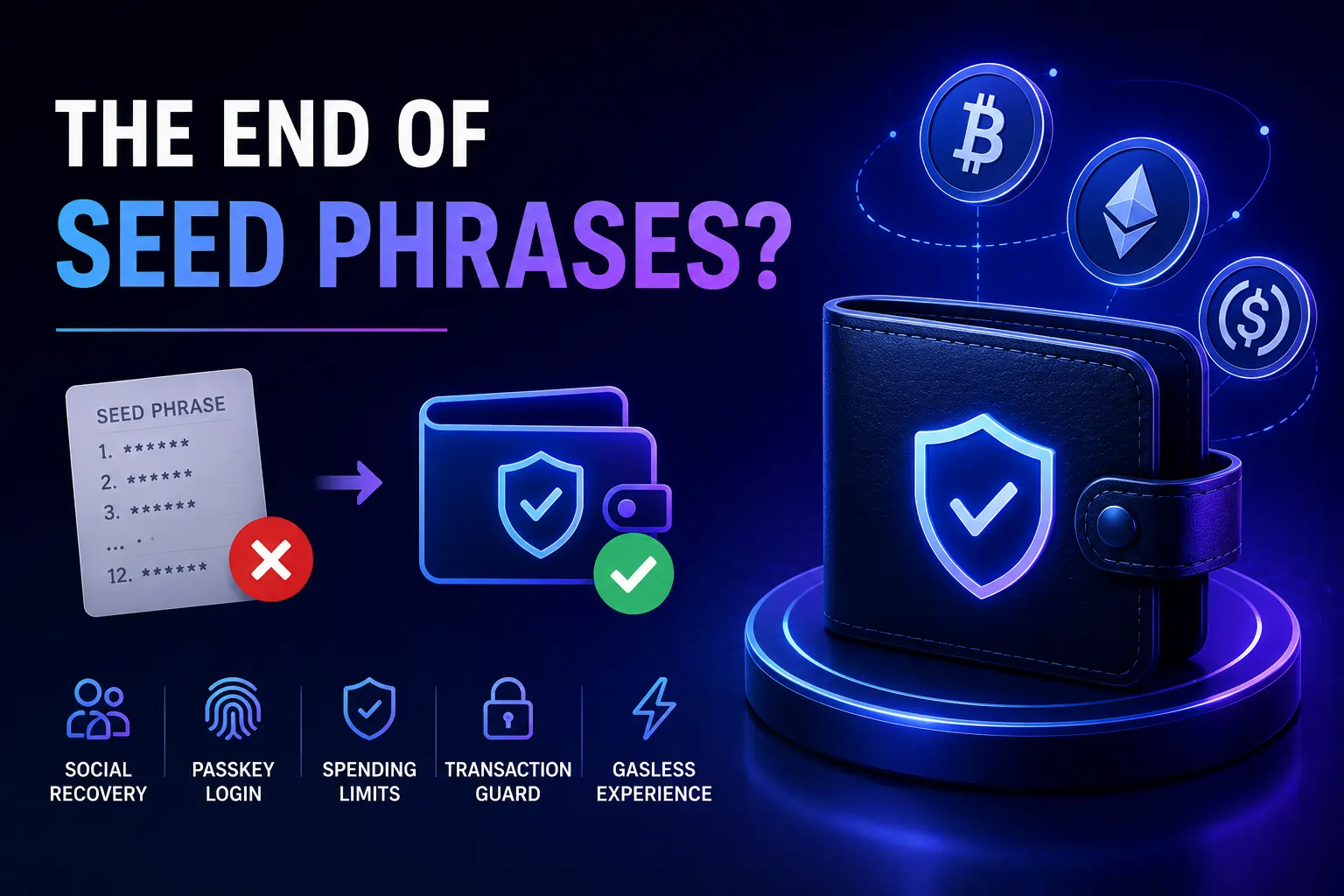
Seed phrases may not disappear completely, but smart wallets could make them much less visible and less dangerous for everyday crypto users. A seed phrase is usually a group of 12 or 24 words that can restore access to a crypto wallet. It is powerful because anyone who has it can control the wallet. But it is also risky because if you lose it, forget it, store it badly, or accidentally share it, your crypto may be gone forever. Smart wallets aim to solve this problem. Instead of forcing every user to manage one fragile recovery phrase, smart wallets can use features like social recovery, spending limits, multi-signature approvals, passkeys, account freezing, transaction simulations, and gas sponsorship. In simple words, smart wallets try to make crypto feel more like a secure modern app, without removing the core idea of user ownership.
Why Seed Phrases Became a Problem
Seed phrases were designed for self-custody. They give users control over their crypto without needing a bank, broker, or exchange to manage funds. This is one of crypto’s biggest strengths. But it is also one of its biggest barriers. For advanced users, seed phrases are manageable. They can write them down, store them offline, use hardware wallets, and understand recovery rules. But for beginners, seed phrases are confusing and stressful. A new user may ask:
- Where should I store these words?
- Can I save them in my phone?
- What happens if I lose them?
- Can customer support recover my wallet?
- Why can someone steal everything if they see these words?
- Why does one mistake mean permanent loss?
This is not how most people expect financial apps to work. In traditional banking, if you forget your password, you can reset it. In crypto, if you lose your seed phrase, there may be no reset button. That level of responsibility is powerful, but it is not beginner-friendly.
What Is a Smart Wallet?
A smart wallet is a crypto wallet powered by smart contracts. Instead of being controlled only by one private key, a smart wallet can include programmable rules. These rules can define how transactions are approved, how recovery works, who can help restore access, how much can be spent, which apps are trusted, and what happens if suspicious activity is detected. Traditional crypto wallets are often called externally owned accounts, or EOAs. They depend heavily on private keys and seed phrases. Smart wallets are different because they can behave more like programmable accounts. A smart wallet can still be non-custodial, meaning the user can keep control. But it can also offer safety features that old wallet designs do not support easily. This is why smart wallets are often seen as the next evolution of crypto wallets.
What Is Account Abstraction?
Account abstraction is the technology concept behind many smart wallet improvements. In simple words, account abstraction makes crypto wallets more flexible and programmable. Instead of every wallet working the same way, wallets can be customized with better security, recovery, and user experience features. Account abstraction can allow wallets to support:
- Social recovery
- Multi-signature approvals
- Passkey login
- Gasless transactions
- Spending limits
- Session keys
- Transaction batching
- Automatic safety checks
- Custom permission rules
For users, the result is simple: crypto can become easier and safer to use. Instead of asking users to understand every technical detail, account abstraction lets wallet developers build safer experiences in the background.
How Smart Wallets Can Reduce Seed Phrase Risk
Smart wallets can reduce seed phrase risk in several ways.
1. Social Recovery
Social recovery allows users to recover access with help from trusted people, devices, or services. These trusted recovery contacts are sometimes called guardians. For example, if you lose access to your wallet, your chosen guardians may help restore it. No single guardian can steal your funds, but a required number of them can help you recover access. This is much easier for normal users than relying only on one seed phrase.
2. Passkeys and Biometric Login
Smart wallets may support passkeys, device authentication, or biometric login. This can make wallet access feel more like using a modern banking or payment app. Instead of copying seed phrases or entering private keys, users may approve transactions through secure device-based authentication.
3. Spending Limits
A smart wallet can set daily or weekly spending limits. If a hacker gains access, they may not be able to drain everything instantly. This is similar to card limits in traditional finance, but built into the wallet itself.
4. Account Freezing
Some smart wallets can allow temporary account freezing. If suspicious activity is detected, the wallet can be paused before funds are lost. This gives users more time to react.
5. Transaction Simulation
Smart wallets can show what a transaction will do before the user signs it. This can help prevent wallet-draining attacks, fake approvals, and malicious smart contract interactions.
6. Multi-Signature Security
A smart wallet can require multiple approvals before large transactions. For example, a business wallet may require two or three team members to approve withdrawals. This is much safer than one person holding a single private key.
Why Smart Wallets Matter for Beginners
Crypto has a user experience problem. Many people are interested in digital assets, but they are afraid of making irreversible mistakes. Smart wallets can help by making crypto safer without forcing users to become security experts. A beginner should not need to understand private key management, gas tokens, contract approvals, bridge risks, and network fees on day one. A better wallet can hide complexity while still giving users control. This is important for mainstream adoption. If crypto wants to reach millions of new users, wallets must become easier and safer. Smart wallets could make onboarding feel closer to normal apps while keeping the benefits of blockchain ownership.
Smart Wallets and Gasless Transactions
One of the most frustrating parts of crypto is gas fees. On many blockchains, users must hold the network’s native token to pay transaction fees. For example, they may need ETH to move a token on Ethereum. This can confuse beginners who already hold USDT, USDC, or another asset but cannot move it without first buying ETH. Smart wallets can support gas sponsorship through systems known as paymasters. This means an app, wallet provider, or third party can pay the gas fee on behalf of the user. This creates a smoother experience. A user may be able to send a token, mint an NFT, or interact with an app without manually managing gas. Gasless transactions do not mean transactions are free. Someone still pays. But the fee can be handled in a more user-friendly way.
Smart Wallets vs Exchange Wallets
Smart wallets are different from exchange wallets. An exchange wallet is usually custodial. The exchange controls the private keys and manages the wallet infrastructure. This is easy for beginners, but users depend on the exchange. A smart wallet can offer a better middle ground. It can improve recovery and usability while still allowing users to keep control of their assets. In other words: Exchange wallets are easy, but require trust in a platform. Traditional self-custody wallets give control, but are difficult and risky. Smart wallets aim to combine control with better safety and usability. This is why smart wallets could become important for both beginners and advanced users.
Are Smart Wallets Completely Safe?
No wallet is completely safe. Smart wallets reduce some risks, but they introduce others. Because they rely on smart contracts, they may be vulnerable to bugs if the code is poorly written. A flawed recovery system or permission rule could create problems. There is also the risk of bad wallet design. If a wallet makes recovery too easy, attackers may exploit it. If it makes recovery too hard, users may still lose access. Smart wallets also depend on infrastructure such as bundlers, paymasters, and wallet providers. If these systems fail or become centralized, users may face limitations. So smart wallets are not magic. They are a major improvement, but they still require audits, good design, secure defaults, and user education.
Will Smart Wallets Replace Seed Phrases?
Smart wallets may not fully replace seed phrases immediately, but they can make seed phrases less central to the user experience. In the future, many users may create wallets with passkeys, social recovery, or device-based authentication. Seed phrases may still exist behind the scenes, or they may be replaced by more flexible recovery models. Advanced users may continue using hardware wallets and traditional seed phrase storage. Beginners may prefer smart wallets that feel safer and easier. The future will probably include both models:
- Traditional wallets for users who want maximum manual control
- Smart wallets for users who want safer and more flexible self-custody
- Exchange wallets for users who prefer custodial convenience
The important shift is that seed phrases may no longer be the only path to self-custody.
Why This Could Change Crypto Adoption
Smart wallets could remove one of crypto’s biggest adoption barriers: fear. Many people do not avoid crypto because they dislike blockchain. They avoid it because the experience feels risky. They worry about losing passwords, sending funds to the wrong address, signing malicious transactions, or being unable to recover an account. Smart wallets can solve many of these problems. They can make wallets more forgiving. They can create safer defaults. They can reduce phishing damage. They can help users recover access. They can make transaction fees easier. They can support business-grade approvals. If crypto becomes safer to use, more people may be willing to try it. That is why smart wallets are not just a technical upgrade. They are a user experience upgrade.
Final Thoughts
Seed phrases helped make self-custody possible, but they also made crypto difficult for ordinary users. A single list of words controlling an entire wallet is powerful, but unforgiving. Smart wallets offer a better path. Through account abstraction, social recovery, spending limits, passkeys, gas sponsorship, and transaction safety tools, they can make crypto more secure and more usable. This does not mean seed phrases will disappear overnight. Many users will still use them, especially for long-term storage and hardware wallets. But the future of crypto onboarding may look very different. The next generation of users may not start with a seed phrase. They may start with a smart wallet that feels simple, safe, and familiar. If that happens, smart wallets could become one of the most important upgrades in crypto history.
Frequently asked questions
What is a seed phrase?
A seed phrase is a group of words used to recover access to a crypto wallet. Anyone with the seed phrase can usually control the wallet.
Why are seed phrases risky?
Seed phrases are risky because if you lose them, you may lose access to your crypto. If someone else gets them, they can steal your funds.
What is a smart wallet?
A smart wallet is a crypto wallet powered by smart contracts. It can support features such as social recovery, spending limits, gasless transactions, and multi-signature security.
What is account abstraction?
Account abstraction is a blockchain design approach that makes wallets more programmable, flexible, and user-friendly.
Can smart wallets remove seed phrases?
Smart wallets may reduce the need for users to manage seed phrases directly, but seed phrases may still exist in some wallet setups.
What is social recovery?
Social recovery is a wallet recovery method where trusted contacts, devices, or guardians help restore access if the user loses control.
Latest Post
 06 Sep, 2026
How to Build a Crypto Options Trading Platform
 05 Sep, 2026
How to Launch a Crypto Prop Trading Platform
 03 Sep, 2026
How to Scale a Crypto Exchange for High Trading Volume
 02 Sep, 2026
How to Design a Crypto Exchange Fee Structure
 01 Sep, 2026
Market Makers vs Liquidity Providers: What Is the Difference?
Build with Javizen.
Planning an exchange, token or blockchain product? Talk to our team and turn the ideas in this article into a launch-ready platform.