
Tokenized Stocks Explained: Are Pre-IPO Crypto Markets the Next Big Trend?
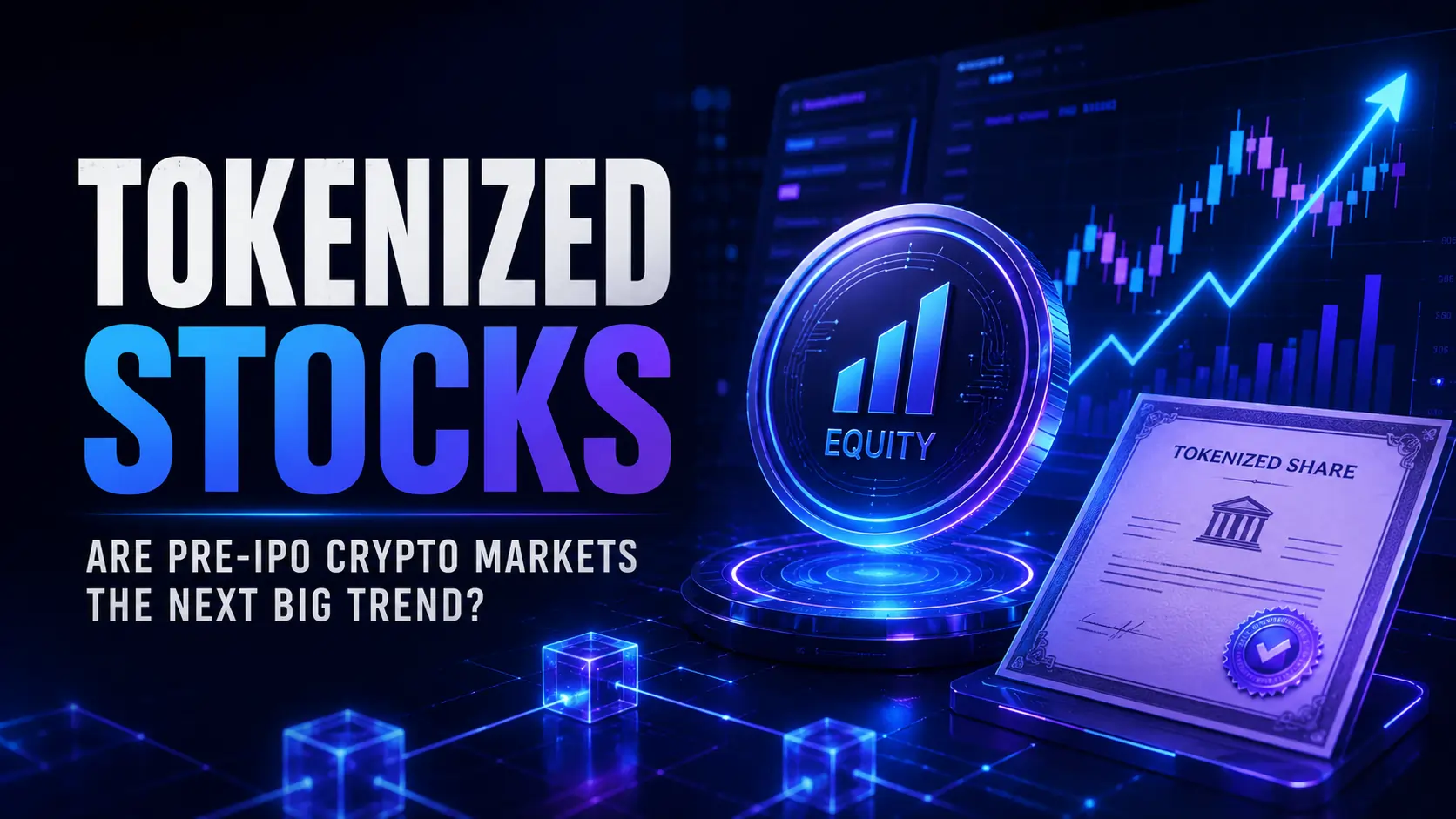
What Are Tokenized Stocks?
Tokenized stocks are blockchain-based tokens designed to represent exposure to traditional stocks or stock-like assets. Instead of buying a share only through a traditional broker, users may be able to access a token that tracks the value of a public stock, ETF, or sometimes a private-market asset. In simple words, tokenized stocks try to bring equity markets on-chain. They combine traditional stock exposure with blockchain features such as faster settlement, fractional access, digital wallets, and extended trading hours. However, tokenized stocks are not always the same as owning real shares directly. Some tokens may represent a claim on an underlying share held by a custodian. Others may be synthetic products that only track a price. This difference is extremely important for beginners.
Why Tokenized Stocks Are Trending
Tokenized stocks are becoming one of the hottest topics in crypto because they sit at the intersection of three major trends: real-world asset tokenization, retail demand for stock exposure, and crypto-native trading infrastructure. For years, crypto markets have traded 24/7, while traditional stock markets follow limited opening hours. Crypto users are used to instant transfers, global access, stablecoins, self-custody, and fast settlement. Traditional stock markets, on the other hand, often depend on brokers, clearing systems, regional access rules, and market-hour restrictions. Tokenized stocks attempt to bridge these two worlds. They allow stock-like exposure to live on blockchain rails, creating a new type of market where equities, stablecoins, wallets, and DeFi may eventually interact. The trend has become even stronger with the rise of pre-IPO crypto products. These products aim to give traders exposure to private companies before they become publicly listed. That idea is powerful, but it is also risky because private markets are less transparent and harder to value than public stocks.
How Do Tokenized Stocks Work?
Tokenized stocks can work in different ways depending on the platform and legal structure. In one model, a company or custodian holds real shares of a public company. Then, tokens are issued on a blockchain to represent economic exposure to those shares. If the stock price rises, the token price is expected to follow. If the stock pays dividends, the token structure may reflect that benefit in some way. In another model, the token does not represent ownership of the actual stock. Instead, it may be a synthetic product that tracks the price of a stock or private company valuation. This can give traders price exposure, but it may not include shareholder rights. This is why users should always ask one question before buying any tokenized stock:
What exactly does this token represent?
Does it represent real ownersip? A custodial claim? A synthetic derivative? A contract? A price-tracking instrument? The answer determines the risk.
Tokenized Stocks vs Real Stocks
A real stock usually gives the holder ownership interest in a company. Depending on the share class, it may include voting rights, dividend rights, and legal protections under securities laws. A tokenized stock may or may not provide those same rights. Some tokenized products only provide price exposure. Others may represent indirect ownership through a custodian or regulated structure. Here is the simple difference:
| Feature | Real Stocks | Tokenized Stocks |
|---|---|---|
| Ownership | Usually direct or broker-held ownership | Depends on structure |
| Trading Hours | Limited market hours | May offer extended or 24/5 trading |
| Settlement | Traditional clearing systems | Can be faster on blockchain rails |
| Access | Depends on broker and country | Potentially more global |
| Rights | May include voting and dividends | Depends on product terms |
| Main Risk | Market and company risk | Market, platform, legal, and custody risk |
The biggest mistake beginners make is assuming every tokenized stock is the same as owning a traditional share. It is not always the same.
What Are Pre-IPO Crypto Markets?
Pre-IPO crypto markets are trading products that give users exposure to companies before they go public. These may include private companies expected to launch major IPOs. In traditional finance, pre-IPO access is usually limited. Venture capital firms, private equity funds, institutional investors, employees, and wealthy accredited investors often get access before the public. Retail investors usually wait until the company lists on a stock exchange. Crypto platforms are trying to change this by creating pre-IPO products that let traders speculate on the future value of private companies. Some products may be tokenized claims connected to private shares. Others may be pre-IPO perpetual futures, which are derivatives that track expected valuation or future stock price. These are not the same as owning actual private company shares. This makes pre-IPO crypto markets exciting, but also very speculative.
What Are Pre-IPO Perpetual Futures?
Pre-IPO perpetual futures are crypto-style derivatives linked to the expected value of a private company before it officially lists on a public stock exchange. A perpetual future, or “perp,” is a contract with no fixed expiry date. In crypto, perps are commonly used to trade Bitcoin, Ethereum, and other digital assets with leverage. When this model is applied to pre-IPO companies, traders can speculate on where the company’s stock may trade after listing. For example, if a private company is expected to IPO at a certain valuation, pre-IPO perps may trade above or below that implied price based on market demand. The key point is this: A pre-IPO perp is not the same as owning pre-IPO shares. It is usually a speculative derivative. It may not be backed by actual shares, and its price can move based on hype, liquidity, leverage, and market sentiment.
Why Are Crypto Traders Interested in Tokenized Stocks?
Crypto traders are interested in tokenized stocks for several reasons. First, they offer access. Many users around the world cannot easily buy U.S. stocks or private-market assets through traditional brokers. Second, they offer flexibility. Tokenized products may allow smaller position sizes, faster transfers, and extended trading hours. Third, they fit crypto-native behavior. Users can potentially trade with stablecoins, hold assets in digital wallets, and move between crypto and stock-like exposure inside one platform. Fourth, they create new markets. Instead of crypto exchanges only listing coins, they can become gateways to stocks, ETFs, commodities, and private-market exposure. This is why tokenized stocks are often discussed as part of the larger real-world asset trend.
Benefits of Tokenized Stocks
1. Fractional Access
Tokenized stocks may allow users to buy small amounts instead of purchasing a full share. This can make expensive stocks more accessible.
2. Extended Trading Hours
Some tokenized stock platforms offer trading outside normal stock market hours. This appeals to crypto users who are used to 24/7 markets.
3. Faster Settlement
Blockchain-based systems may settle faster than traditional clearing infrastructure, depending on the platform design.
4. Global Access
Tokenized stocks may allow users in more regions to access equity-like products, although availability depends on regulation.
5. Integration With Crypto
Tokenized stocks can potentially interact with stablecoins, wallets, DeFi protocols, and crypto trading platforms.
Risks of Tokenized Stocks and Pre-IPO Markets
Tokenized stocks also come with serious risks. The first risk is ownership risk. The token may not give you the same rights as a real shareholder. The second risk is issuer and custodian risk. If a platform or custodian fails, token holders may be affected. The third risk is liquidity risk. A tokenized stock may not always have enough buyers and sellers. The fourth risk is pricing risk. Some tokenized products may trade at a premium or discount to the underlying asset. The fifth risk is regulatory risk. Tokenized stocks may be treated as securities or derivatives, and rules vary by country. The sixth risk is leverage. Pre-IPO perps can become highly speculative, especially when traders use borrowed funds. The seventh risk is misunderstanding. Many beginners may think they are buying real shares when they are actually buying price exposure or a derivative.
Are Tokenized Stocks Good for Beginners?
Tokenized stocks are an important trend to understand, but they may not be ideal for complete beginners. A beginner should first understand normal stocks, crypto wallets, stablecoins, derivatives, and tokenization before trading tokenized equities or pre-IPO products. If a tokenized stock is simple, regulated, transparent, and backed by real assets, it may be easier to understand. But if it is a synthetic pre-IPO derivative with leverage, it may be too risky for beginners. A useful rule is: If you cannot explain what backs the token, what rights you have, and how the price is calculated, you should not trade it yet.
How to Evaluate a Tokenized Stock Product
Before using any tokenized stock platform, ask these questions:
- Does the token represent real shares or only price exposure?
- Who is the issuer?
- Who holds the underlying asset?
- Can users redeem the token?
- Does the token include dividends?
- Are there voting rights?
- Is the platform regulated?
- What happens if the platform fails?
- Is there enough liquidity?
- Are users allowed to trade this product in their country?
- Is leverage involved?
- Are fees and spreads clearly explained?
These questions help separate real innovation from risky marketing.
Are Pre-IPO Crypto Markets the Next Big Trend?
Pre-IPO crypto markets could become a major trend because they target a real problem: access to private-market opportunities. Many investors want exposure to high-growth companies before they become public, but traditional access is limited. Crypto platforms can create faster, more open, and more global markets for this kind of exposure. That is why the idea is attracting attention. However, the trend is not risk-free. Private company valuations can be unclear. Pre-IPO products may not be backed by actual shares. Liquidity can disappear quickly. Leverage can amplify losses. Regulation may change fast. So, are pre-IPO crypto markets the next big trend? Yes, they could be. But they may also become one of the riskiest trends if users do not understand what they are buying.
Final Thoughts
Tokenized stocks are one of the most important developments in the real-world asset sector. They show how blockchain could expand beyond crypto coins and become a new financial layer for stocks, ETFs, private markets, and other traditional assets. The promise is clear: more access, faster settlement, fractional ownership, extended trading hours, and easier integration with crypto platforms. But the risks are just as important. Tokenized stocks are not always the same as real shares. Pre-IPO perps are not the same as owning private company stock. Some products may be backed by real assets, while others may be synthetic derivatives. For beginners, the most important lesson is simple: do not buy the narrative before understanding the structure. Tokenized stocks may become a major part of the future of finance, but smart users will look beyond the hype and ask what the token actually represents.
Frequently asked questions
What are tokenized stocks?
Tokenized stocks are blockchain-based tokens designed to represent exposure to traditional stocks, ETFs, or stock-like assets.
Are tokenized stocks real shares?
Not always. Some tokenized stocks may represent indirect claims on real shares, while others may only provide synthetic price exposure.
What are pre-IPO crypto markets?
Pre-IPO crypto markets are products that allow traders to speculate on the value of private companies before they list on public stock exchanges.
What is a pre-IPO perpetual future?
A pre-IPO perpetual future is a derivative contract that tracks the expected price or valuation of a private company before its IPO.
Are pre-IPO perps the same as owning pre-IPO shares?
No. Pre-IPO perps are usually speculative derivatives and may not be backed by actual private shares.
What are the risks of tokenized stocks?
Risks include unclear ownership rights, custodian risk, platform risk, liquidity risk, regulatory risk, pricing risk, and leverage risk.
Latest Post
 06 Sep, 2026
How to Build a Crypto Options Trading Platform
 05 Sep, 2026
How to Launch a Crypto Prop Trading Platform
 03 Sep, 2026
How to Scale a Crypto Exchange for High Trading Volume
 02 Sep, 2026
How to Design a Crypto Exchange Fee Structure
 01 Sep, 2026
Market Makers vs Liquidity Providers: What Is the Difference?
Build with Javizen.
Planning an exchange, token or blockchain product? Talk to our team and turn the ideas in this article into a launch-ready platform.