

Per-user custodial wallets, multi-network deposits and withdrawals, smart deposit detection and a treasury sweep — the part of an exchange that holds other people's money.
Wallet infrastructure is where an exchange either works or fails publicly. A trader forgives a slow chart; nobody forgives a deposit that never credits.
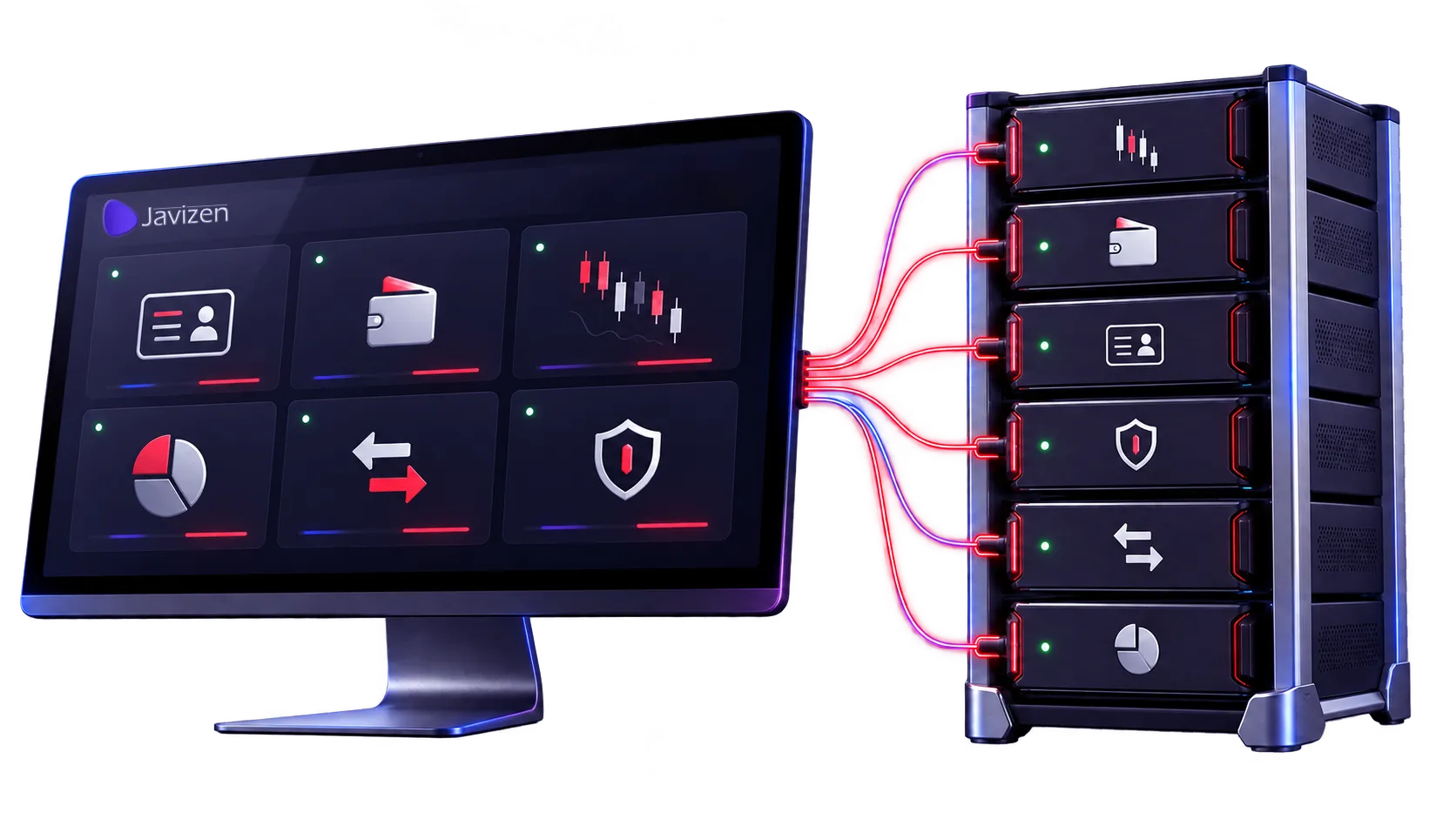
This is what ships in the Javizen stack, and how each piece is operated from the admin panel.
Deposits
Each user gets their own generated address per network, so an incoming transfer is attributed without a memo or a support ticket.
- Per-user wallet generation on every connected network
- Smart per-chain detection and confirmation, with instant crediting where the chain allows it
- Fiat rails alongside crypto — bank wire and card
- Deposit history reconciled against on-chain state
Withdrawals
The path out is the one that needs controls, and they are administrative rather than hard-coded.
- Admin approval and review queues before funds move
- Per-asset and per-network withdrawal fees
- Limits and account-level restrictions
- Full audit trail across deposits, withdrawals, trades and internal transfers
Networks and custody
Adding a chain is configuration, not a development project.
- Unlimited networks; ERC20, TRC20, BEP20 and Bitcoin supported out of the box
- Master wallet sweep aggregating user balances into an admin treasury
- Cold storage for reserves
- Per-network balance snapshots in the operations panel
Questions you might have
Is this custodial?
Yes. Users hold balances on the platform, which is what a centralized exchange is. The controls above are what make that defensible.
Can we add a network you do not support?
Yes. Network management is designed for it, and you hold the source if a chain needs work beyond configuration.
Who holds the keys?
You do. It deploys to your infrastructure and we do not operate it for you.
See this part of the stack running
A technical demo walks the architecture with someone who deploys it. Bring your engineer — the questions that matter here are theirs.