
How to Design a Crypto Exchange Fee Structure

What Is a Crypto Exchange Fee Structure?
A crypto exchange fee structure defines how the platform charges users for different activities, including trading, deposits, withdrawals, advanced products, and additional services. Unlike traditional online businesses that often rely on subscription or transaction fees, crypto exchanges usually operate through multiple revenue streams.
The most common exchange fees are:
- Trading fees generated from executed orders
- Deposit and withdrawal fees related to asset transfers
- Additional fees from products such as futures, margin, APIs, and premium services
The exact structure depends on the exchange business model. A retail-focused exchange may prioritize simple pricing, while an institutional platform may offer volume-based discounts, customized pricing, and advanced trading services.
Why Fee Structure Matters for Crypto Exchanges
Fees directly affect how users interact with an exchange. For active traders, even small differences in trading costs can influence platform selection. Professional traders often compare exchanges based on maker and taker fees, liquidity quality, API performance, and available markets. For exchanges, fees must cover infrastructure costs such as servers, security, liquidity, blockchain operations, compliance, customer support, and development. However, maximizing fees in the short term can damage growth. Higher fees may increase immediate revenue but reduce trading volume and user retention. The goal is to create a model where users feel they receive fair value while the exchange maintains healthy margins.
Understanding Trading Fees
Trading fees are usually the primary revenue source for crypto exchanges. Most centralized exchanges use a maker-taker fee model. A maker is a trader who adds liquidity to the order book by placing a limit order that is not immediately executed. A taker removes liquidity by matching an existing order from the order book. Because makers improve market depth, exchanges often provide lower fees or incentives for maker activity.
A typical exchange fee system may consider:
- Trading volume over a specific period
- User account level
- Market type
- Liquidity contribution
- VIP status
Volume-based pricing is one of the most common approaches because it encourages traders to increase activity on the platform. As users generate higher trading volume, they move into lower fee tiers. This creates an incentive for professional traders to remain active on the exchange.
Designing a Maker-Taker Fee Model
A maker-taker structure should align user behavior with the exchange's liquidity goals. If maker fees are too high, users may avoid placing limit orders, reducing order-book depth. If taker fees are too high, active traders may move to platforms with cheaper execution. A balanced model usually rewards liquidity providers while maintaining sustainable revenue from market execution. The exchange should also consider different markets separately. Spot trading, futures, options, and other products may require different fee structures because they have different operational costs and risk profiles. For example, futures trading involves additional infrastructure such as margin systems, liquidation engines, funding calculations, and risk management. Therefore, its fee model may differ from simple spot trading.
Deposit and Withdrawal Fees
Deposit and withdrawal fees are another important part of exchange pricing. Crypto deposits are often free because users transfer assets into exchange-controlled wallets. However, blockchain transaction costs may influence withdrawal pricing. Withdrawal fees help cover network expenses, wallet operations, security processes, and transaction management. Because blockchain fees change over time, exchanges should avoid creating confusing fixed pricing models. Instead, they should use transparent mechanisms that clearly communicate costs before users confirm transactions. For fiat deposits and withdrawals, costs may depend on banking partners, payment gateways, regional payment providers, and currency conversion services.
Fees for Advanced Trading Products
Modern crypto exchanges often provide more than spot trading. Additional products create new revenue opportunities but also require specialized pricing models. Examples include futures, margin trading, options, staking services, API access, OTC trading, and token launch services. Each product has different operational requirements. For example, futures platforms may generate revenue through trading fees and funding-related mechanisms. Margin products may include borrowing costs. Institutional APIs may use customized pricing based on usage and trading volume. The fee structure should reflect the actual value and operational cost of each service rather than applying the same model across every product.
VIP Levels and Loyalty Programs
VIP programs are commonly used by exchanges to retain high-volume traders. Instead of offering the same pricing to every user, exchanges create different levels based on trading volume, account balance, or other activity metrics. Higher-tier users may receive lower trading fees, dedicated support, increased limits, or access to additional features. A well-designed VIP system creates a relationship between user activity and benefits. It encourages traders to increase engagement while allowing the exchange to reward its most valuable customers. However, VIP programs should remain transparent. Users should clearly understand how they qualify and what benefits each level provides.
Balancing Revenue and User Growth
One of the biggest challenges in exchange pricing is finding the right balance between profitability and competitiveness. A new exchange may choose lower fees initially to attract users and increase liquidity. A mature platform may optimize pricing based on user behavior, market position, and operational costs. Fee decisions should be based on data rather than assumptions.
Exchange operators should monitor metrics such as:
- Trading volume changes after fee updates
- User retention and activity
- Liquidity growth
- Revenue per user
- Competitor pricing
A small fee reduction can sometimes increase overall revenue if it creates significantly higher trading activity.
Common Mistakes When Designing Exchange Fees
Many exchanges make the mistake of focusing only on the fee percentage. The lowest fee does not always create the best trading environment. Traders also care about liquidity, execution quality, security, reliability, available markets, and platform features. Another common mistake is creating complicated pricing systems that users cannot understand. Transparency is essential. Users should easily find information about trading fees, withdrawal costs, VIP requirements, and additional charges. Hidden fees may create short-term revenue but damage trust and customer loyalty. A successful fee model should be simple enough for users to understand while flexible enough for the exchange to scale.
How Fee Structure Connects With Exchange Infrastructure
Fee management is not an isolated feature. It must be connected with the core exchange architecture. The trading engine needs to calculate fees during order execution. The internal ledger must record fee transactions accurately. The administration system should allow authorized operators to configure rates, discounts, and user tiers. A scalable exchange should support dynamic fee management, allowing businesses to create different pricing rules for markets, user groups, trading products, and regions. This requires strong integration between trading, accounting, user management, and reporting systems. Javizen's crypto exchange infrastructure includes configurable trading systems, administration tools, reporting capabilities, and modular components that allow businesses to design exchange operations around their own revenue model.
White-Label Exchange Fee Customization
Businesses launching a crypto exchange often need flexibility in pricing. A white-label exchange platform can provide a ready-made foundation while allowing operators to customize trading fees, withdrawal rules, VIP structures, supported markets, and revenue strategies. This approach allows companies to focus on their business model rather than building fee-management systems from zero. Custom development may be required when an exchange needs unique pricing logic, specialized institutional plans, or complex financial products. The right approach depends on the target market, customer segments, and long-term growth strategy.
How Javizen Supports Crypto Exchange Revenue Models
Javizen provides customizable crypto exchange infrastructure designed for businesses that want to launch and scale digital asset platforms. The platform supports centralized exchange operations with features such as spot trading, futures, P2P exchange, wallets, liquidity integrations, APIs, reporting, and administrative controls. Through modular architecture, businesses can configure trading environments, manage users, create different pricing strategies, and expand their platform with additional blockchain products. A strong technical foundation makes it easier to build flexible revenue models without compromising security or operational control.
Final Thoughts
Designing a crypto exchange fee structure requires more than choosing a transaction percentage. A successful model must consider user behavior, market competition, liquidity goals, operational costs, and future growth plans. The best exchange fee structures are transparent, flexible, and aligned with both user value and business sustainability. Whether an exchange focuses on retail traders, professional investors, or institutional clients, the pricing model should support long-term platform growth. With a modular exchange infrastructure, businesses can create customized fee systems while maintaining the security, scalability, and operational efficiency required in the crypto market.
Frequently asked questions
What is a crypto exchange fee structure?
A crypto exchange fee structure defines how an exchange charges users for trading, withdrawals, deposits, and additional platform services.
What are maker and taker fees?
Maker fees apply to users who add liquidity through limit orders, while taker fees apply to users who execute existing orders from the order book.
How do crypto exchanges make money from fees?
Most exchanges generate revenue through trading fees, withdrawal fees, advanced trading products, institutional services, and other platform features.
Should new exchanges offer lower fees?
Lower fees can help attract users and liquidity, but the exchange should balance pricing with infrastructure costs and long-term sustainability.
Can exchange fees be customized?
Yes. A modular crypto exchange platform can support customized trading fees, VIP levels, discounts, withdrawal rules, and product-specific pricing.
How do fees affect exchange liquidity?
Fee structures influence trader behavior. Competitive fees and maker incentives can encourage more activity and improve market liquidity.
Can Javizen help build a custom crypto exchange fee system?
Yes. Javizen provides customizable exchange infrastructure with administration, trading, reporting, and revenue-management capabilities.
Latest Post
 06 Sep, 2026
How to Build a Crypto Options Trading Platform
 05 Sep, 2026
How to Launch a Crypto Prop Trading Platform
 03 Sep, 2026
How to Scale a Crypto Exchange for High Trading Volume
- 02 Sep, 2026
How to Design a Crypto Exchange Fee Structure
 01 Sep, 2026
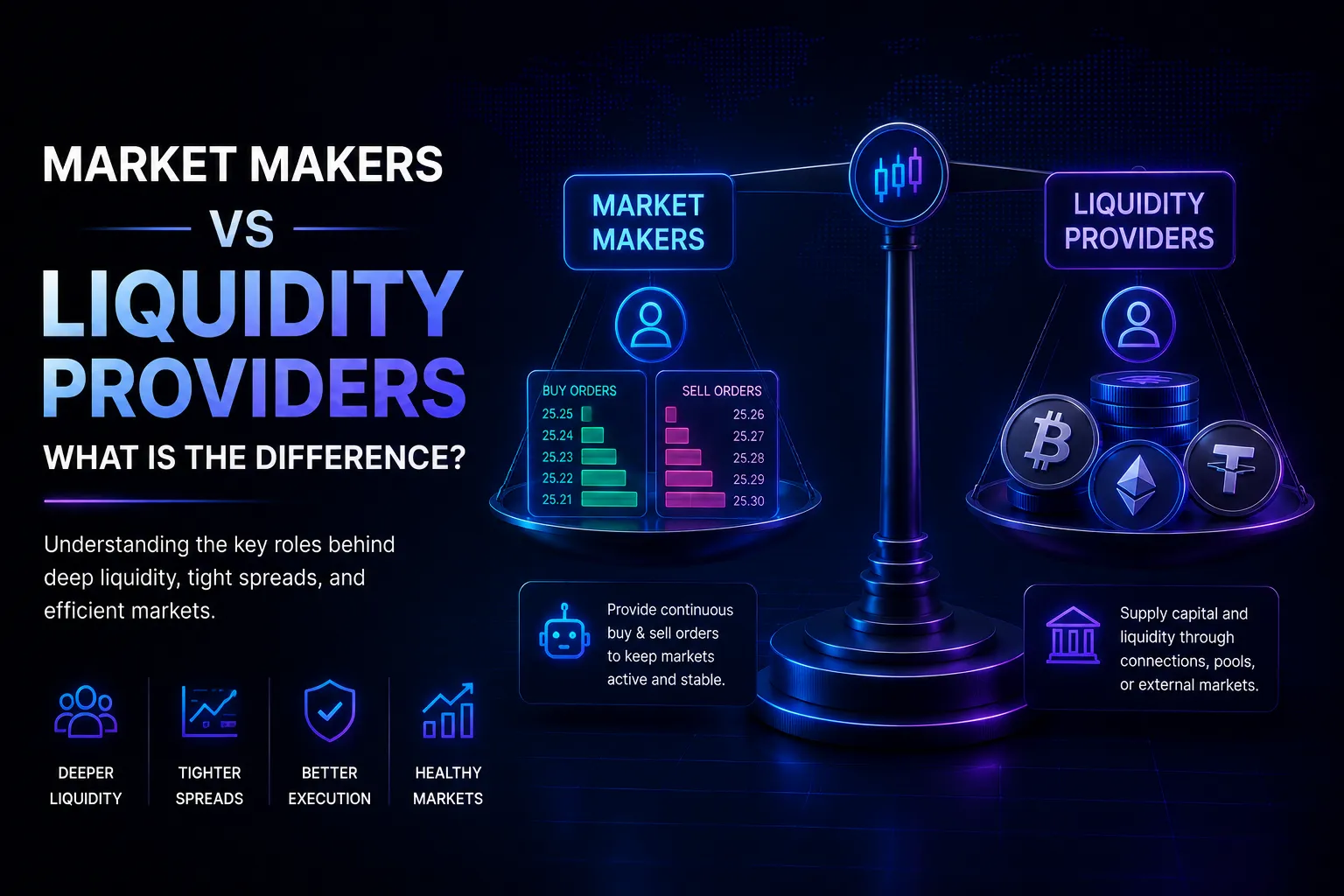
Market Makers vs Liquidity Providers: What Is the Difference?
Build with Javizen.
Planning an exchange, token or blockchain product? Talk to our team and turn the ideas in this article into a launch-ready platform.