
How Much Does It Cost to Build a Crypto Exchange?

Average Cost to Build a Crypto Exchange in 2026
There is no single fixed price for crypto exchange development. However, most projects fall into three broad categories: Basic white-label crypto exchange: $8,000–$50,000+ This is usually suitable for MVPs, small markets, simple spot trading, limited customization, and faster launch timelines. Professional crypto exchange platform: $50,000–$250,000+ This range usually includes stronger customization, better UI/UX, liquidity integration, multi-currency wallets, admin tools, KYC, security features, and business-specific modules. Custom institutional-grade exchange: $300,000–$1,000,000+ A fully custom platform may include advanced matching infrastructure, high-volume performance, custom custody, derivatives, mobile apps, market-making systems, complex compliance workflows, and enterprise security. These numbers are estimates, not fixed quotes. The final cost depends on your business model, feature list, jurisdiction, security level, liquidity needs, team quality, and launch timeline.
White-Label vs Custom Crypto Exchange Development
One of the biggest cost decisions is whether to build from scratch or use a white-label crypto exchange script. A white-label crypto exchange is a ready-made platform that can be customized with your brand, trading pairs, languages, design, modules, fees, and business rules. It helps businesses launch faster because the core infrastructure already exists. A custom crypto exchange is built from zero. This gives maximum flexibility, but it requires more time, more engineers, more testing, and a much larger budget. For many startups, brokers, fintech companies, and regional exchange operators, white-label infrastructure is the more practical option. It reduces technical risk and allows the company to focus on licensing, liquidity, marketing, operations, and user acquisition. That is exactly where Javizen helps. Javizen provides crypto exchange infrastructure and ready-made exchange scripts that can be customized for different business models, including spot exchange, P2P exchange, futures trading, staking, swap, launchpad, and more.
Main Factors That Affect Crypto Exchange Development Cost
1. Exchange Type
The first cost factor is the type of exchange you want to build. A spot crypto exchange is usually the most affordable and practical starting point. It allows users to buy and sell crypto assets through trading pairs such as BTC/USDT or ETH/USDT. A P2P crypto exchange requires escrow, dispute management, payment proof, trader ratings, order ads, and stronger user verification. A futures or derivatives exchange is more expensive because it needs leverage controls, liquidation logic, margin system, risk engine, insurance fund, funding rate logic, and advanced monitoring. A hybrid exchange or DEX/CEX model may require smart contracts, wallet connection, on-chain settlement, and additional blockchain development. The more complex the exchange model, the higher the cost.
2. Trading Engine and Matching System
The matching engine is the heart of a crypto exchange. It matches buy and sell orders in real time. A simple exchange may use a basic matching setup, but a serious platform needs high performance, low latency, accurate order execution, and protection against system failures. If you want market orders, limit orders, stop-limit orders, advanced order types, high-frequency trading support, or deep order book performance, the cost increases. A weak trading engine can damage user trust quickly. Traders expect fast execution, accurate balances, and stable markets.
3. Wallet Infrastructure
Crypto wallet infrastructure is one of the most sensitive and expensive parts of an exchange. Your platform may need support for Bitcoin, Ethereum, Tron, BNB Chain, Solana, stablecoins, and other networks. Each network requires deposit address generation, withdrawal processing, confirmation tracking, transaction history, fee handling, and security controls. A professional wallet system should also include hot wallet management, cold storage workflow, withdrawal approval, risk checks, and admin monitoring. Because wallets handle real user funds, this is not an area where businesses should cut corners.
4. Security Features
Security can significantly affect cost, but it is essential. A crypto exchange should include two-factor authentication, email verification, anti-phishing code, device and IP logs, withdrawal whitelist, role-based admin permissions, rate limiting, encryption, server hardening, backup systems, and monitoring. Additional costs may include penetration testing, security audits, infrastructure monitoring, and incident response planning. In crypto, a single security failure can destroy years of brand-building. Good security is not just a technical feature; it is a business survival requirement.
5. KYC, AML, and Compliance
Compliance costs depend heavily on your target market. If your exchange serves users in regulated regions, you may need identity verification, AML monitoring, sanctions screening, transaction monitoring, and legal documentation. In the EU, MiCA creates a unified regulatory framework for crypto-asset service providers, and ESMA describes it as covering authorization, transparency, disclosure, supervision, and market integrity requirements for crypto-asset services. This means compliance should be planned before launch, not added later. Legal consultation, licensing, policies, and third-party verification tools can all add to the total cost.
6. Liquidity Integration
Liquidity is what makes your exchange usable. Without liquidity, users see empty order books, wide spreads, and poor execution. New exchanges usually solve liquidity in one of three ways: They connect to external exchanges, use liquidity providers, or run internal market-making systems. Liquidity integration can add development cost, setup cost, and ongoing monthly fees. However, it is one of the most important investments for user trust and trading volume.
7. Admin Panel and Operations Tools
The admin panel is where your team manages the exchange. It should include user management, KYC review, wallet monitoring, deposits, withdrawals, trading pairs, fees, support tickets, reports, roles, permissions, announcements, and risk controls. A basic admin panel may be enough for a small MVP, but a serious exchange needs advanced operational tools. The better your admin system is, the easier it becomes to manage compliance, support, finance, and growth.
8. UI/UX Design and Mobile Experience
A crypto exchange should be powerful but easy to use. Users need a clean dashboard, simple deposit and withdrawal flows, clear trading screens, responsive design, and a mobile-friendly interface. Custom UI/UX increases the cost, but it also improves conversion, retention, and trust. If your target users are beginners, you may need a simple swap/convert interface. If your target users are professional traders, you need advanced charts, order books, trade history, API keys, and portfolio tools.
Hidden Costs of Building a Crypto Exchange
Many businesses focus only on development cost, but the real budget should include:
- Hosting and cloud infrastructure
- Server monitoring
- Liquidity provider fees
- Blockchain node or API costs
- KYC/AML provider fees
- Security audits
- Legal and licensing expenses
- Customer support team
- Maintenance and bug fixing
- Marketing and user acquisition
- Mobile app development
- Ongoing feature updates
Some public estimates suggest ongoing maintenance, liquidity, and hosting for white-label exchanges can range from thousands to tens of thousands of dollars per month, depending on scale and vendor model.
How to Reduce the Cost of Launching a Crypto Exchange
The best way to reduce cost is not to choose the cheapest development team. The best way is to reduce unnecessary complexity. Start with a clear MVP. Launch with the features your users actually need. For many businesses, that means spot trading, wallets, KYC, admin panel, referral, support, and liquidity integration. More advanced modules like futures, staking, P2P, and launchpad can be added later. Using a ready-made crypto exchange script can also reduce development time and risk. Instead of building the matching engine, wallet system, admin panel, and user dashboard from zero, you start with a working foundation and customize it. With Javizen, businesses can launch faster using modular crypto exchange infrastructure, then expand the platform as the market grows.
Final Answer: How Much Should You Budget?
If you want a simple MVP, you may need a budget starting from tens of thousands of dollars. If you want a professional exchange with real customization, liquidity, KYC, security, and admin tools, expect a much larger budget. If you want a fully custom institutional-grade exchange, the cost can reach hundreds of thousands or more. The smartest approach is to define your business model first, then choose the right development path. If speed, cost control, and lower technical risk are important, a ready-made crypto exchange script is usually the best option. If you need highly unique architecture, then custom development may be worth the investment. Javizen helps businesses launch crypto exchange platforms with scalable infrastructure, ready-made modules, and customization options designed for real market conditions.
Frequently asked questions
How much does it cost to build a crypto exchange?
A basic white-label crypto exchange may start from around $8,000–$50,000, while professional and enterprise platforms can cost $50,000–$250,000+. Fully custom exchanges can cost hundreds of thousands or more.
Is a white-label crypto exchange cheaper than custom development?
Yes. A white-label exchange is usually cheaper and faster because the core platform is already built. Custom development costs more because every major system must be designed, developed, tested, and maintained from scratch.
What is the most expensive part of a crypto exchange?
The most expensive parts are usually the trading engine, wallet infrastructure, security, liquidity integration, compliance tools, and custom development.
Can I launch a crypto exchange with a small budget?
Yes, but you should start with a focused MVP. Avoid adding every feature at launch. Start with core trading, wallets, KYC, admin tools, and liquidity, then expand later.
How long does it take to build a crypto exchange?
A white-label exchange can often be launched much faster than a fully custom platform. Custom exchange development may take many months or even more than a year, depending on complexity.
Why choose Javizen for crypto exchange development?
Javizen provides crypto and blockchain infrastructure, including ready-made crypto exchange scripts and customizable modules for spot trading, P2P, futures, staking, swap, launchpad, wallets, admin management, and more.
Latest Post
 06 Sep, 2026
How to Build a Crypto Options Trading Platform
 05 Sep, 2026
How to Launch a Crypto Prop Trading Platform
 03 Sep, 2026
How to Scale a Crypto Exchange for High Trading Volume
 02 Sep, 2026
How to Design a Crypto Exchange Fee Structure
 01 Sep, 2026
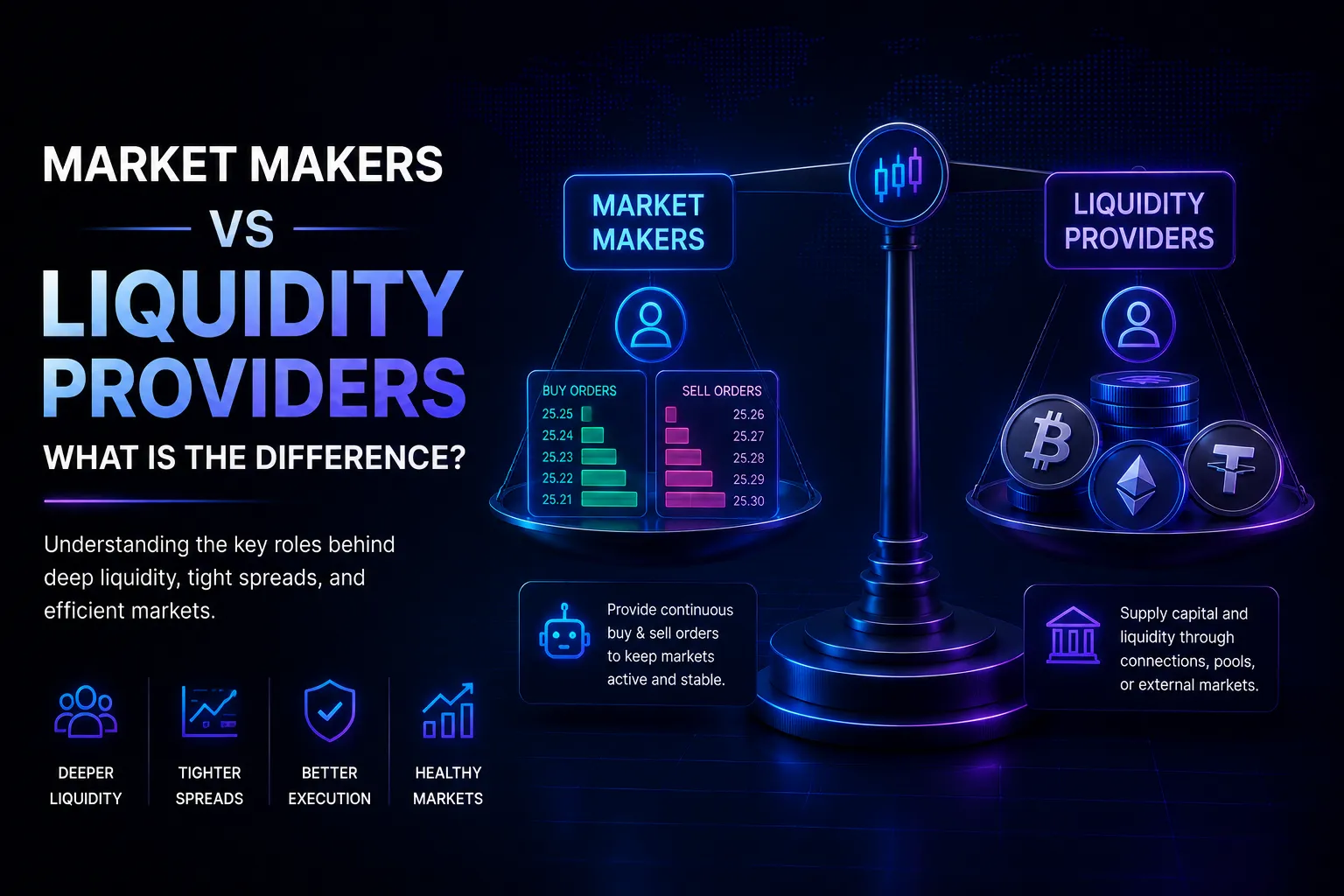
Market Makers vs Liquidity Providers: What Is the Difference?
Build with Javizen.
Planning an exchange, token or blockchain product? Talk to our team and turn the ideas in this article into a launch-ready platform.